Performance Guides
E20 Petrol in India: How to Protect Your Engine and Recover Throttle Response and Mileage
E20 became the only petrol at Indian pumps on 1 April 2026. The practical, product-backed routine that wins back throttle response and mileage while protecting your engine, for cars and motorcycles alike.

E20 petrol became the only fuel sold at Indian pumps on 1 April 2026, and if your car or motorcycle suddenly feels a little slower to respond, drinks fuel a little faster, or hesitates on a cold morning, you are not imagining it. Twenty percent ethanol in the tank changes how your engine breathes, burns and ages. The good news: with the right ignition, the right fuel care and a simple routine, you can win most of that lost throttle response and mileage back, and protect your engine while you do it.
What E20 is, in one minute
E20 is petrol blended with up to 20 percent ethanol, at a minimum Research Octane Number of 95. Since 1 April 2026 there is no E10 or E5 option left anywhere in India. Two dates decide how much your vehicle feels it: everything built from April 2023 is certified E20 material-compliant, and engines from April 2025 are calibrated for the blend as well. Anything older was never designed for this much ethanol, and feels it most.
For the full background, what ethanol does inside the tank, which components fail first, the government-versus-critics safety debate and which manufacturers actually sell a retrofit kit, read the companion guide: E20 ethanol fuel in India, what it does to your engine and which parts fail first. This guide is the fix.

A note from experience. Do not assume that E20-compliant means trouble-free. We are seeing plenty of real-world issues on compliant vehicles too, not just old ones. My own E20-compliant Honda CB350RS developed a gasket leak. That is exactly why I treat a quick fuel-system and gasket inspection every one to two months as non-negotiable, not optional. Catching a weeping gasket or a softening seal early is the difference between a five-minute fix and a stranded ride.
Lijo Mathew Jacob, Rawtorque
Why your engine feels different on E20
Three real, well-understood effects are at work. None of them mean your engine is unsafe. They simply mean it needs a little more care than it did on older fuel.

1. Lower energy density, so mileage drops
A litre of ethanol carries less chemical energy than a litre of petrol. Burn a blend that is one-fifth ethanol and each litre releases slightly less energy, so the engine has to use a touch more fuel for the same work. The government's own figures put the drop at 1 to 2 percent for vehicles recalibrated for E20 and 3 to 6 percent for others, while many owners report steeper drops in the real world. Tuning and clean fueling narrow that gap considerably.
2. A leaner, less eager burn, so throttle response softens
Ethanol carries extra oxygen, so a blend shifts the air-fuel mixture leaner unless the engine compensates. On an E20-tuned vehicle the electronics adjust automatically. On an older or non-tuned engine, the result can be a slightly hesitant throttle, a softer initial pull and harder cold starts, because the mixture and the spark are no longer perfectly matched to the fuel.
3. Ethanol attracts water and loosens deposits, so the engine ages faster
Ethanol is hygroscopic, which means it pulls moisture out of the air. Water in the tank promotes rust and corrosion in fuel lines, injectors and metal surfaces, and in extreme cases the water and ethanol can separate out of the petrol entirely. Ethanol is also a mild solvent, so it slowly attacks older rubber seals and gaskets and loosens varnish and deposits that then travel into injectors. This is the effect that quietly shortens the life of fuel-system parts if it is left unmanaged.
Where we stand on ethanol
To be fair, ethanol is not pure villainy. On paper it carries a high octane rating and acts as an oxygenate, and in an engine that is properly tuned for it and fed clean, consistent fuel, a blend can burn reasonably well. But paper is not the pump, and two things sit uneasily with us.
First, the purity of the ethanol actually reaching Indian pumps is not something an owner can verify. Ethanol is only as good as its water content and its consistency, and an inconsistent or contaminated blend is exactly what accelerates the corrosion, moisture and seal problems described above. You are trusting a supply chain you cannot see, with fuel you cannot test.
Second, and more simply: this change was rolled out nationwide without a real, informed choice for the people who now have to run their vehicles on it. We do not support ethanol being added to the country's fuel without the consent of the people of India. Riders and drivers were not asked, and many are now paying for that in lost mileage, unexpected repairs and plain uncertainty.
None of this changes the reality on the road today. E20 is what comes out of the nozzle, so the rest of this guide is about protecting your engine and your wallet within that reality. But we will say plainly what we think, and we think owners deserved a choice.
How to recover throttle response and mileage, and protect your engine
Here is the practical part. These steps work together: clean fuel delivery, protected fuel system, sharp ignition and correct fueling. Do all of them and the difference is genuinely noticeable, on both cars and motorcycles.
Step 1. Keep the fuel system clean

Because ethanol loosens deposits and can leave its own residue, the single highest-value habit on E20 is regular fuel-system cleaning. Clean injectors atomise fuel into a fine, even spray, which is exactly what a lean-leaning blend needs for a strong, responsive burn. Clogged or crusty injectors give you the opposite: rough idle, flat throttle and wasted fuel.
- For a targeted clean, an injector cleaner such as the Liqui Moly Injection Cleaner (Petrol) dissolves deposits on injectors and intake valves.
- For a deeper, whole-system service, the Liqui Moly Gasoline Engine System Cleaner works through the entire fuel path, and the Catalytic System Clean extends that care to the catalytic converter and oxygen sensor.
Browse the full range of petrol and diesel cleaners in Liqui Moly Lubricants & Care.
Step 2. Add an E20 protection additive at every relevant fill
This is the step designed specifically for the era we are now in. An E20 protection additive tackles the two ethanol-specific problems at once: it inhibits corrosion on the metals in your fuel system and helps manage the water that ethanol attracts, while keeping injectors and valves clean. If you ride or drive an older or non-E20-tuned vehicle, treat this as essential rather than optional.
- The Liqui Moly E20 Additive (Petrol Fuel Protection) is built for exactly this purpose. It adds a corrosion-protection and cleaning package tuned for higher-ethanol Indian fuel, which is why it belongs in the toolkit of anyone running E20 through an engine that was not born for it. One 150 ml can treats roughly a full tank, 15 ml for every 4 litres.
- If you would rather buy the whole routine in one go, the E20 Protection Kit for Cars and the E20 Protection Kit for Motorcycles pair this additive with the matching cleaner and performance shot, and the E20 Starter Kit covers the two essentials on their own.
Step 3. Upgrade your ignition to iridium

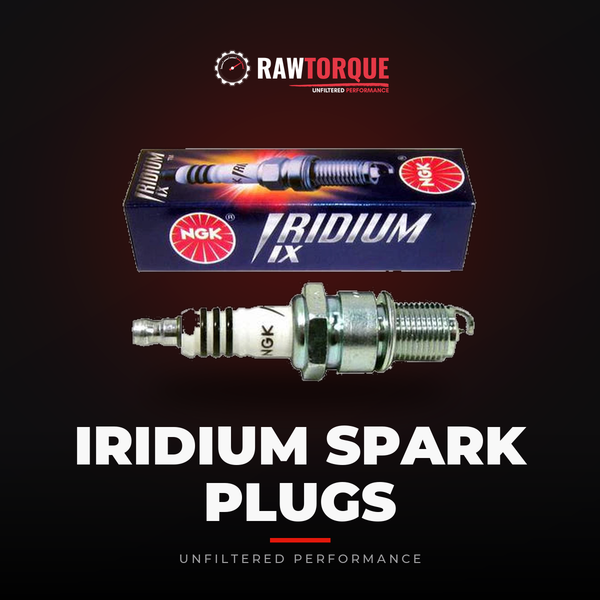
Ignition is where you claw back throttle response. A leaner ethanol blend asks more of the spark, and this is precisely where iridium spark plugs earn their place. Their needle-thin centre electrode concentrates the spark and lets the flame front grow quickly and evenly, which means more complete combustion, a crisper answer to the throttle and easier cold starts, the exact symptoms E20 tends to aggravate. Double iridium plugs carry that hard-wearing metal on both electrodes for a longer, more stable service life.
- For most Indian motorcycles, a fitment-matched plug from the Iridium Spark Plugs collection is the upgrade of choice. It carries both NGK Iridium IX and NGage Double Iridium options across Royal Enfield, KTM, Bajaj, Yamaha, Hero, Honda, Triumph, Jawa and more.
- Petrol car owners are covered too, for example the NGK LKR7BIX iridium plug for 1.2L petrol engines used across popular Hyundai, Tata and Maruti K-series cars.
If you are unsure which plug and heat range suit your exact model, our team is happy to provide fitment guidance before you buy.
Step 4. Restore the lost pull with a performance additive
To directly counter the slightly softer power feel of the blend, a performance fuel additive or octane booster helps the mixture burn faster and more completely, sharpening acceleration between fuel-system services.
- The Liqui Moly Speed Tec Gasoline additive is aimed at quicker throttle response and smoother power delivery.
- The Liqui Moly Octane Booster raises octane for a cleaner, more knock-resistant burn, useful on higher-strung engines.
Step 5. Optimise fueling on fuel-injected motorcycles
Many modern fuel-injected bikes run slightly lean from the factory, and E20 nudges them leaner still, which shows up as engine heat, a flat midrange and jerky low-speed running. An adaptive fuel controller corrects the air-fuel mixture in real time, so the engine gets the fuel it actually needs on the blend. This also covers the bikes Royal Enfield's rubber-only retrofit kit leaves out, including the 650 twins.
- The FuelX adaptive fuel optimisers from Race Dynamics are a plug-in way to richen and smooth fueling on supported models, and the wider ECU Tuning & Fuel Controllers range covers deeper calibration for those who want it.
Step 6. Fix the free habits

Some of the best E20 protection costs nothing:
- Do not let fuel sit for long periods. Ethanol blends degrade and absorb water faster than old petrol, so a vehicle parked for weeks should be stored with a full tank and an additive, or run down and refreshed.
- Keep to your service intervals. Fresh oil and a clean air filter matter more, not less, on E20.
- Upgrade your fuel lines. This is the most important hardware fix for older vehicles. Ordinary rubber and nitrile fuel hose swells, hardens and cracks when it is exposed to 20 percent ethanol. Replace it with ethanol-resistant line, specifically Viton (FKM) or PTFE (Teflon) hose, which shrug off ethanol's solvent and corrosive action and stay pliable for the long haul. If your vehicle predates E20 compliance, have the fuel hoses, seals and gaskets inspected and switched to these materials when due.
- Buy fuel from busy, reputable pumps so you get fresher stock with less settled water.
A simple E20 maintenance routine
| When | What to do | What it protects |
|---|---|---|
| Every 1 to 2 months (non-negotiable, even on E20-compliant vehicles) | Quick fuel-system and gasket inspection for leaks and weeping seals | Catches gasket and seal failures early, before they strand you |
| Every long park-up or every few fills | Add an E20 protection additive | Corrosion, water, injector cleanliness |
| Every 3,000 to 5,000 km | Run an injector or fuel-system cleaner | Throttle response, mileage, smooth idle |
| Every major service | Inspect and, if needed, upgrade to iridium plugs | Combustion quality, cold starts, power |
| As needed before a spirited ride or trip | Add a performance additive or octane booster | Acceleration and power feel |
| Once, for older or FI vehicles | Switch to Viton (FKM) or PTFE fuel lines, and fit an adaptive fuel controller on lean FI bikes | Fuel-line integrity, air-fuel mixture, engine temperature |
The kits, if you would rather not assemble it yourself
Every product named above is sold individually. We have also put the routine together as three kits, each priced below the sum of its bottles.
- E20 Protection Kit for Cars: E20 Additive, Gasoline Engine System Cleaner and Octane Booster. The full clean, boost and protect sequence for a petrol car.
- E20 Protection Kit for Motorcycles: E20 Additive, 4T Additive Shooter and Speed Additive Shooter. One-shot 80 ml doses sized for a bike tank.
- E20 Starter Kit: E20 Additive and Gasoline Engine System Cleaner. The two-bottle way to begin, for a car or a bike.
The bottom line

E20 is here to stay, and it does not have to cost you performance or peace of mind. Keep the fuel system clean, protect it against ethanol's corrosion and moisture with a purpose-built additive, run ethanol-safe fuel lines, sharpen the burn with iridium ignition, and correct the fueling where needed. And whatever you ride or drive, compliant or not, keep up that one to two month inspection habit. Do that and most riders and drivers get their throttle response and mileage back, with an engine that is better protected than it was on the old fuel.
Not sure where to start for your exact car or motorcycle? Reach out to the Rawtorque team for fitment guidance on spark plugs and a fuel-care plan for your engine.
Related guides: What E20 does to your engine and which parts fail first, iridium spark plugs by model, Liqui Moly fuel care.
Explore the range
Featured in this guide
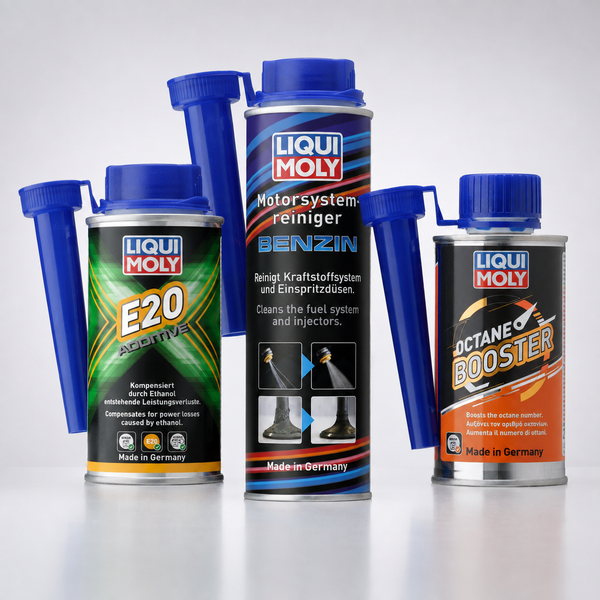
E20 Protection Kit for Cars (E20 Additive + Gasoline System Cleaner + Octane Booster)
Rs. 3,279.00
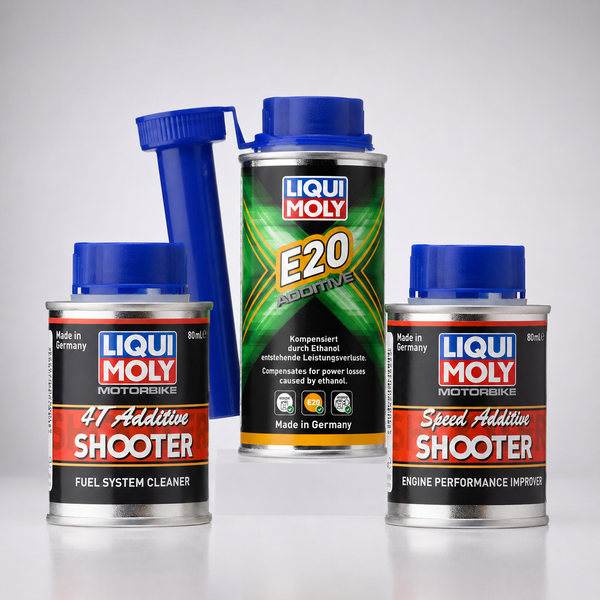
E20 Protection Kit for Motorcycles (E20 Additive + 4T Shooter + Speed Shooter)
Rs. 1,879.00
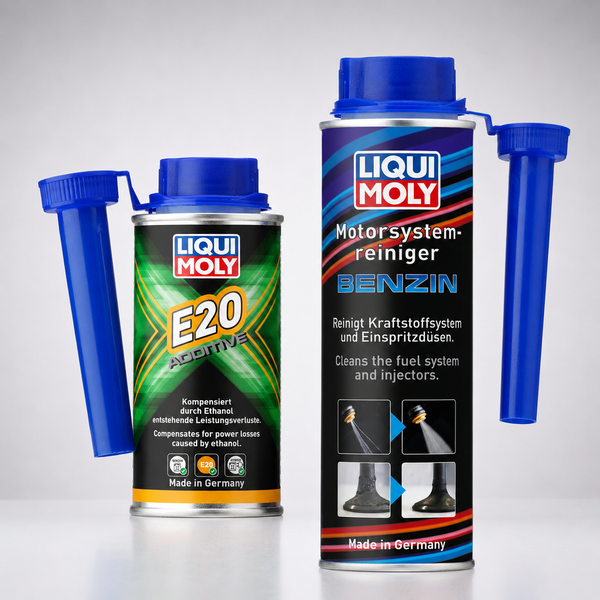
E20 Starter Kit (E20 Additive + Gasoline System Cleaner)
Rs. 2,379.00
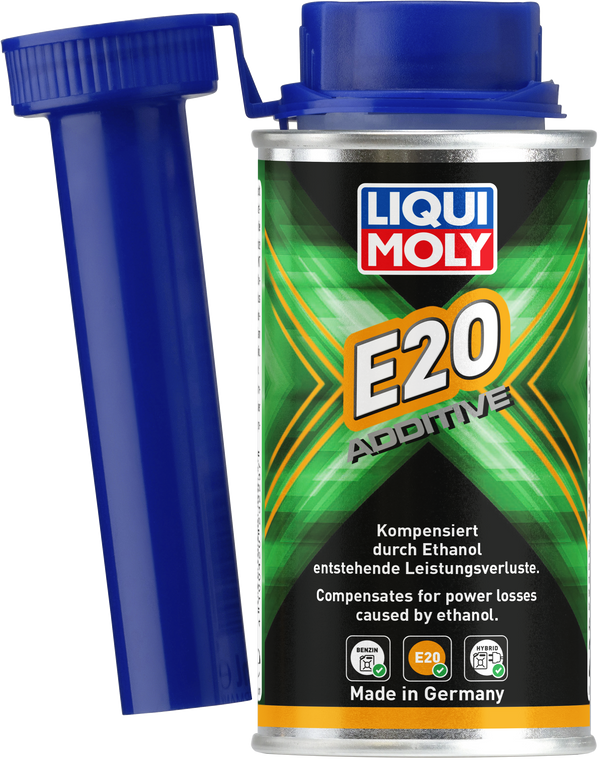
Liqui Moly E20 Additive Petrol Fuel Protection (150 ml)
Rs. 1,069.00
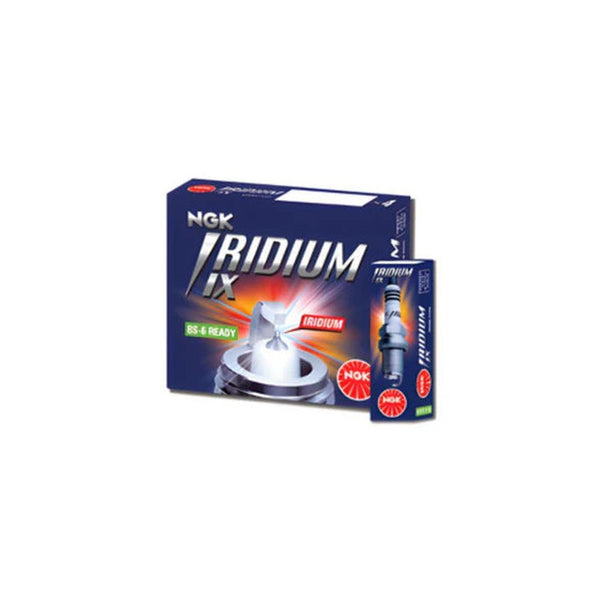
NGK LKR7BIX-P Iridium MAX Spark Plug for Maruti Baleno / Swift / Dzire / Ignis, Hyundai Grand i10 / i20 & Tata Tiago / Tigor / Altroz 1.2
Rs. 1,152.00
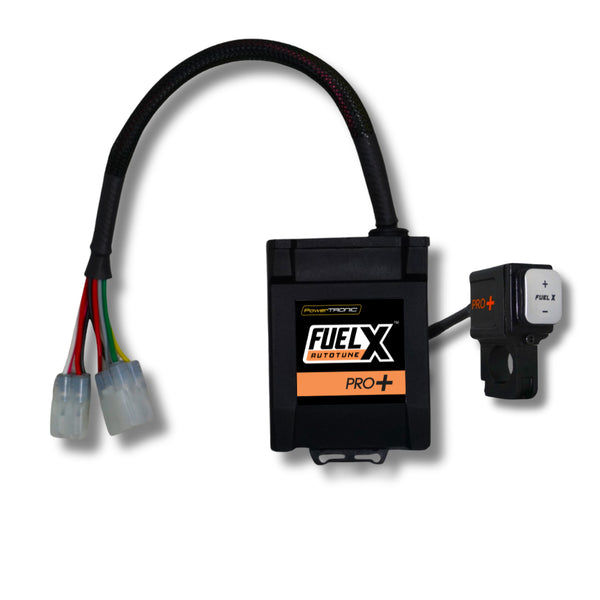
FuelX Pro+, Advanced Smart Autotune Module for Royal Enfield Motorcycles
Rs. 13,469.00


