Performance Guides
Building an Interceptor 650 for long distance touring: the parts order that actually works
An Interceptor 650 built for long distance touring starts with the rider, not the engine. Sort the seat, the handlebar reach, and the wind blast first. Only…

An Interceptor 650 built for long distance touring starts with the rider, not the engine. Sort the seat, the handlebar reach, and the wind blast first. Only then move to luggage, lighting, protection, and finally the mild performance tweaks that make 10-hour highway days feel effortless instead of draining. The 648cc parallel twin is already a relaxed long-stroke motor with enough torque to sit at 120 km/h all day. What holds the Interceptor back on a 600 km day is the stock ergonomics, the heat that radiates up at low speeds, and the snatchy low-rpm fuelling that gets tiresome in traffic and tight ghat sections. This build order fixes those problems in sequence, using parts available right now for Indian roads and Indian riding conditions.
Why the stock Interceptor 650 feels punishing after 200 km
The Interceptor 650 was designed as a city-friendly roadster, not a mile-eater. The stock seat foam collapses after about 90 minutes. The handlebar places you in a slight forward lean that loads the lower back. There is no wind protection above 80 km/h, so your neck and shoulders take the full force of the airstream. The suspension is set up soft for solo city riding, which means it wallows with luggage and a pillion. And the stock ECU tune runs the engine lean at low throttle openings, creating a jerky on-off throttle response that wears you out in stop-start highway traffic and tight hill roads. These are not dealbreakers for a Sunday breakfast ride. On a 500 km day, they compound into genuine fatigue.
The touring build order: comfort first, luggage second, protection third, performance last
This sequence exists for a reason. Too many riders bolt on a pair of slip-ons and a tail tidy, then discover they cannot ride more than 90 minutes without a numb backside and ringing ears. Start where your body touches the machine. Work outward. End with fuelling and exhaust changes that make the engine run cooler and smoother under sustained load.
1. The contact points: seat, handlebar, footpegs
A touring seat with wider, denser foam and a shape that cups the sit bones is the single most important upgrade for the Interceptor. The stock seat slopes forward slightly, which pushes you into the tank and loads the wrists. A flat or slightly dished touring profile changes the entire riding position. Handlebar risers or a tubular handlebar with more pullback reduce the reach and let you sit upright with relaxed shoulders. If you ride with a pillion, a wider pillion seat and a backrest or top-box with a pad keep the passenger from sliding forward under braking. Footpeg position is personal; some riders prefer a slight rearward shift, others want the stock position with rubber-topped pegs that kill vibration. Change the contact points before you spend a rupee on anything else.
2. Wind protection: a windscreen that does not shake
Above 80 km/h, wind pressure on the chest and helmet becomes the dominant source of fatigue. A well-braced flyscreen or mid-height touring screen takes the blast off the torso without creating helmet buffeting. The key is a mounting system that clamps to the fork stanchions or the headlight bracket with metal hardware, not plastic. Cheap screens vibrate, crack mounts, and create turbulent air right at helmet level. A screen that is too tall for the Interceptor's geometry will do the same. The sweet spot is a screen that directs air to mid-visor level, leaving the helmet in clean airflow. Rawtorque stocks windscreen options in the touring accessories collection; check the product page for fitment details on your model year.
3. Luggage: soft bags, hard cases, or a rack-and-roll system
The Interceptor has a flat subframe and strong rear footpeg hangers that make solid mounting points for saddlebags. Soft panniers with a rigid inner frame are lighter and less likely to crack in a drop. Hard aluminium panniers offer more security and weather protection but add width and weight. Whichever you choose, the mounting rack must triangulate to at least three points on the frame; two-point racks twist under load. A tail rack with a top plate lets you strap down a drybag or a small top-box. Rawtorque carries luggage and mounting solutions from Legundary and LCB in the touring accessories section.
| Luggage type | Best for | Weight | Security | Weather protection |
|---|---|---|---|---|
| Soft panniers with inner frame | Mixed terrain, tight lanes | Low | Basic (cuttable) | Rain covers included |
| Hard aluminium panniers | Pure highway touring | Medium to high | Lockable | Fully sealed |
| Tail rack with drybag | Weekend trips, minimal kit | Lowest | None | Bag-dependent |
| Top-box with backrest | Pillion comfort, city plus highway | Medium | Lockable | Fully sealed |
4. Lighting: see and be seen on unlit highways
The stock Interceptor headlight is adequate for city streets and well-lit highways. On unmarked state highways, in fog, or during night runs through the Western Ghats or the Himalayan foothills, it falls short. Auxiliary LED lights with a focused spot beam and a wider flood pattern give you the reach and spread the stock unit lacks. Mount them low on the crash guard or fork leg to avoid blinding oncoming traffic. Maddog lights are the option Rawtorque stocks in the auxiliary lighting collection. A plug-and-play wiring harness with a relay and a dedicated switch is non-negotiable; do not splice into the stock headlight wiring.
5. Protection: what actually saves the engine in a slide
Engine guards, sump guards, and handguards are insurance, not accessories. The Interceptor's crankcase covers are thin cast aluminium. A low-speed drop on a gravel shoulder can punch a hole and dump oil. A full-wrap engine guard that bolts to the frame downtube and the front engine mount spreads impact loads. A sump guard with a cutout for the oil drain bolt and the oil cooler line is practical for service access. Handguards with an aluminium spine protect levers and keep wind and rain off the gloves on cold morning starts. Legundary and LCB protection parts are listed in the touring accessories collection.
An engine guard is not a cosmetic add-on. On an air/oil-cooled motor like the 650 twin, a cracked crankcase cover on a remote highway is a trip-ending event. The oil cooler lines are also exposed; a guard that wraps around the front of the engine protects those fittings from stone strikes and low-speed tip-overs.
6. Performance: slip-on exhausts and fuelling correction
This comes last because the Interceptor does not need more power to tour. What it needs is smoother throttle response, less heat, and a less restrictive exhaust note that does not drone at cruising rpm. The stock exhaust is heavy and runs the catalytic converter close to the rider's right foot. A pair of slip-on mufflers from Red Rooster, Powerage, Barrel, or Norifumi sheds significant weight and lowers exhaust gas temperature at the exit. The real benefit is not a horsepower gain; it is the reduction in radiated heat at the rider's leg and a cleaner, deeper exhaust note that does not fatigue over hours.
Pairing slip-ons with a FuelX Lite or a PowerTRONIC ECU corrects the lean closed-loop fuelling that makes the Interceptor snatchy at low rpm. The FuelX Lite is a plug-in autotune module that reads the O2 sensor signal and enriches the mixture in real time. No laptop, no maps, no dyno time. It is the most effective single mod for low-speed rideability on the 650 twin. For riders who want full control over ignition timing and fuel maps, the PowerTRONIC ECU offers tuneability via a smartphone app. Both are available in the ECU and fuel controllers collection.
7. Intake and oil: supporting mods for sustained high-speed running
A high-flow air filter from NGage or BMC lets the engine breathe with less restriction, which matters when you are holding 100 to 120 km/h for hours in ambient temperatures above 35 degrees Celsius. The stock paper filter is restrictive when clean and gets worse as it clogs with dust. A performance cotton-gauze filter is washable and re-oilable, which pays off over multiple service intervals. Find options in the performance air filters section.
Engine oil choice matters more on the Interceptor than most riders realise. The 650 twin is air/oil-cooled; it relies on oil to carry heat away from the cylinder head and the underside of the pistons. A full-synthetic 10W-50 or 15W-50 from Motul or Liqui Moly maintains viscosity and film strength at sustained high oil temperatures better than a semi-synthetic. Change it every 5,000 km if you are touring hard. The oil cooler does its job, but it needs clean, high-quality oil flowing through it to work.
How to prioritise your Interceptor touring build: a step-by-step guide
- Ride a 300 km day on the stock bike. Note exactly where the discomfort starts: seat after X hours, wrists after Y km, helmet buffeting above Z km/h. This tells you what to fix first.
- Change the seat and handlebar setup. A touring seat and risers or a different bar are the foundation. Everything else builds on this.
- Add a windscreen that matches your height. Sit on the bike with the screen mocked up if possible. The top edge should be at or just below eye level.
- Choose luggage based on your trip length. Weekend trips need a tail rack and drybag. Week-long tours need panniers. Pick the mounting system first, then the bags.
- Install engine and sump guards. Do this before you head into the hills. A dropped bike on a remote road without protection is a logistical nightmare.
- Wire in auxiliary lights. If any of your riding happens before sunrise or after sunset on highways without streetlights, this is not optional.
- Fit slip-on exhausts and a FuelX Lite together. The two work as a system. Slip-ons alone will not fix the fuelling, and a FuelX alone will not reduce the heat at the exhaust exit. Do them as a pair.
- Upgrade the air filter and switch to full-synthetic oil. These are the final supporting mods that keep the engine happy during sustained high-rpm highway use.
Frequently asked questions
Does the Interceptor 650 need a radiator guard for touring?
The Interceptor 650 is air/oil-cooled and does not have a radiator. It has an oil cooler mounted low behind the front wheel. An oil cooler guard or a sump guard with an integrated mesh section is worth fitting to protect the oil cooler fins from stone damage on highways.
Which slip-on exhaust is best for long distance riding on the Interceptor 650?
The best slip-on for touring is one with a deep, low-frequency note that does not drone at 4,000 to 5,000 rpm. Red Rooster, Powerage, Barrel, and Norifumi all offer options for the 650 twin. The key is a dB level that stays comfortable after six hours in the saddle. Rawtorque stocks all four brands in the performance exhausts collection.
Will a FuelX Lite fix the low-speed jerkiness on my Interceptor?
Yes. The FuelX Lite reads the stock O2 sensor signal and enriches the closed-loop fuelling at low throttle openings. This smooths out the on-off throttle snatch that makes the Interceptor difficult to ride smoothly in traffic and tight corners. It is a plug-in module that requires no tuning.
Can I tour on the stock Interceptor seat?
For distances under 150 km, the stock seat is tolerable. Beyond that, most riders report discomfort and numbness. The foam is too soft and the shape slopes forward. A touring seat with denser foam and a flatter profile is the single most impactful comfort upgrade for the Interceptor 650.
What engine oil should I use for touring on the Interceptor 650?
A full-synthetic 10W-50 or 15W-50 from Motul or Liqui Moly. The 650 twin runs hot under sustained highway load, and the oil is the primary cooling medium in this air/oil-cooled engine. Full-synthetic oil resists thermal breakdown better than semi-synthetic and maintains consistent viscosity across a wider temperature range.
Do I need to remap the ECU after fitting slip-on exhausts?
Slip-ons alone do not require a full ECU remap on the Interceptor 650, but the stock closed-loop fuelling will remain lean at low throttle openings. A FuelX Lite corrects this automatically. If you also change the air filter and the exhaust headers, a PowerTRONIC ECU with a custom map is the right next step.
Featured in this guide

Legundary Interceptor 650 Backrest With Carrier, Mild Steel, Black
Rs. 3,885.00
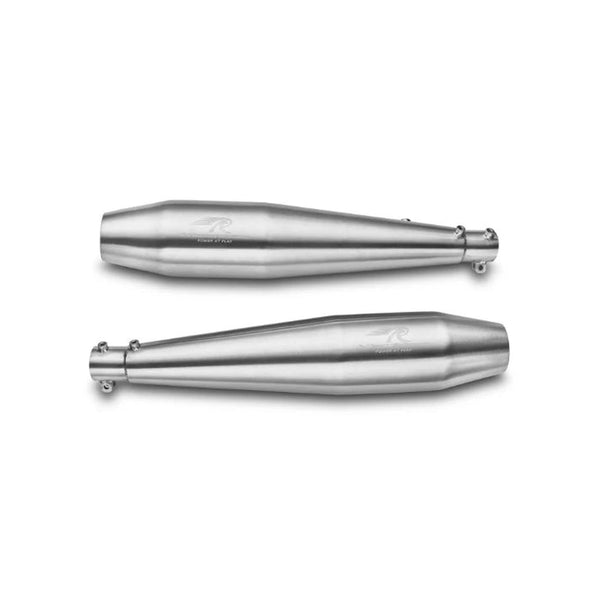
Red Rooster Stellar Exhaust for Interceptor 650 / Continental GT 650, Matte Finish (Brushed 304 SS)
Rs. 20,739.00
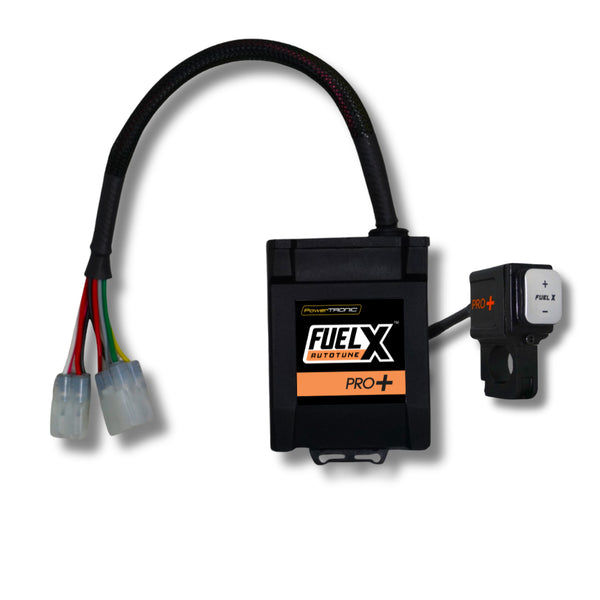
FuelX Pro+, Advanced Smart Autotune Module for Royal Enfield Motorcycles
Rs. 13,469.00
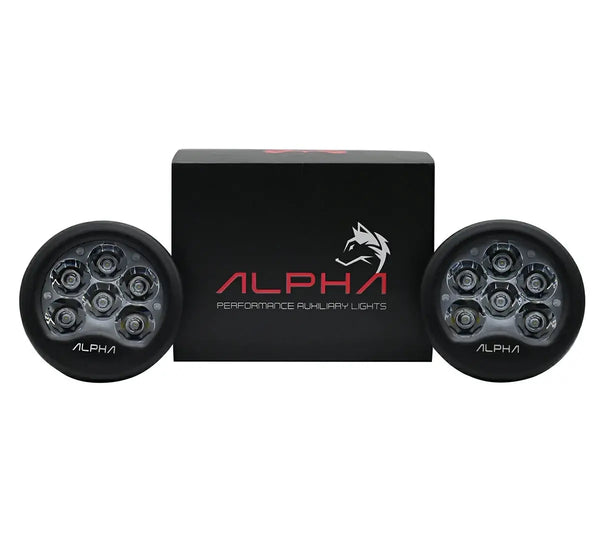
Maddog Alpha Performance Auxiliary Lights | 9600 Lumens | IP67 Waterproof | Universal Fit
Rs. 10,249.00


