Awareness
Himalayan 450 vs KTM 390 Adventure R: Which Tours Better in India?
Himalayan 450 vs ktm guide for Indian riders - fitment specifics, real-world advice and performance insights. No filler.

Himalayan 450 vs KTM 390 Adventure R Touring India: The Ultimate Showdown
By Rawtorque | May 2026 | 15 min read
Riders across India are always looking for that perfect machine to conquer our diverse terrains, from the buttery smooth tarmac of NH44 to the challenging broken trails of Ladakh. Two bikes have recently dominated conversations for their touring prowess: the RE Himalayan 450 and the KTM 390 Adventure R. Both promise adventure, but they deliver it in distinctly different flavours. Choosing between the Himalayan 450 vs KTM 390 Adventure R touring India means weighing raw power against rugged comfort, advanced tech against proven simplicity. This isn't just about spec sheets; it's about which machine feels right when you're 1000 km from home, facing monsoon rains or scorching desert heat.
For touring India, the RE Himalayan 450 offers superior long-distance comfort, better low-end torque for varied terrain, and a more forgiving suspension setup on broken roads, making it ideal for relaxed, extended journeys. The KTM 390 Adventure R, while more potent with higher power and advanced electronics, excels in spirited highway cruising and technical off-road sections, best suited for riders prioritizing performance and sharper handling. The choice between Himalayan 450 vs KTM 390 Adventure R touring India hinges on individual riding style and priority for comfort versus outright performance.
What This Guide Covers
- Engine Performance and Power Delivery: How two different philosophies translate to Indian roads.
- Suspension and Ride Comfort: Taming the unpredictable Indian terrain.
- Chassis, Ergonomics, and Weight: The backbone of long-distance comfort.
- Fuel Economy and Range: Crucial for remote stretches and budget touring.
- Electronics and Rider Aids: Modern tech vs. old-school reliability.
- Braking Performance and Safety: Stopping power when it matters most.
- Build Quality and Durability: Surviving the wear and tear of Indian touring.
- Luggage Carrying Capacity and Touring Accessories: Setting up for the long haul.
- Service Network and Parts Availability: Peace of mind across the country.
- Price, Value, and Running Costs: The financial side of your adventure.
- Off-Road Capability: Beyond the tarmac and into the wild.
Engine Performance and Power Delivery: Himalayan 450 vs. KTM 390 Adventure R
The heart of any touring machine is its engine, and here, the RE Himalayan 450 and the KTM 390 Adventure R offer two very different experiences. It's not just about horsepower figures; it's about how that power is delivered, especially when you're battling headwinds on an open highway or crawling through a mountain pass with luggage.
Why it matters on Indian roads
Indian roads demand versatility. You need enough grunt to overtake quickly on two-lane highways, especially with a pillion and luggage. You also need tractable power for slow-speed maneuvers in traffic, climbing steep inclines, and navigating broken patches. A snatchy throttle or an engine that needs to be constantly revved can be exhausting over a long day. The ability to hold higher speeds comfortably for hours without feeling stressed is paramount for any serious touring in India.
What to look for
- Torque delivery: How much twisting force is available, and at what RPM? More low-end torque means less gear shifting, especially useful in city traffic or off-road.
- Horsepower: The raw power output, which dictates top speed and highway cruising ability.
- Engine refinement: How smooth is the engine? Excessive vibrations can lead to rider fatigue and even numb hands on long rides.
- Fueling: Is the throttle response crisp and predictable, or snatchy and abrupt? Smooth fueling makes a huge difference in control.
- Cooling: Especially relevant in India's hot climate, a good cooling system prevents overheating in slow traffic or intense climbs.
The Contenders
| Feature | RE Himalayan 450 | KTM 390 Adventure R |
|---|---|---|
| Engine Type | 452cc, Liquid-cooled, Single-cylinder, DOHC | 373.2cc, Liquid-cooled, Single-cylinder, DOHC |
| Max Power | 40.02 PS @ 8000 rpm | 43.5 PS @ 9000 rpm |
| Max Torque | 40 Nm @ 5500 rpm | 37 Nm @ 7000 rpm |
| Gearbox | 6-speed | 6-speed |
| Cooling | Liquid-cooled | Liquid-cooled |
The Himalayan 450's new Sherpa 450 engine is a significant upgrade from its predecessor. It's liquid-cooled and produces a healthy 40 Nm of torque at a relatively low 5500 rpm. This translates to excellent tractability and strong pull from lower RPMs, which is a boon for cruising comfortably in higher gears without frequent downshifts. On highways like NH66, this means less fatigue and more relaxed riding. The power delivery is smooth and predictable, making it less intimidating for riders who appreciate a linear surge rather than a sudden burst. This makes the Himalayan 450 vs KTM 390 Adventure R touring India comparison lean towards comfort for the RE.
The KTM 390 Adventure R, on the other hand, is a more aggressive beast. Its 373.2cc engine, shared with the Duke 390, pumps out 43.5 PS and 37 Nm of torque. While the peak power is higher, the torque comes in at a higher 7000 rpm. This means you need to keep the engine singing in its upper rev range to extract its full potential. The power delivery is sharp and immediate, characteristic of KTM, which can be thrilling on open roads and twisties. However, in stop-and-go traffic or technical off-road sections, this can sometimes feel a bit twitchy, demanding more precise throttle control. The quickshifter on the KTM is a nice touch for seamless gear changes on the fly, adding to its performance credentials.
For touring, especially with luggage or a pillion, the Himalayan 450's strong low-to-mid range torque is arguably more practical for the varied conditions of Indian roads. It allows for easier overtakes without stressing the engine and provides a more relaxed riding experience. The KTM, while more powerful, requires a more active riding style to stay in its powerband, which can be exhilarating but also more fatiguing over long distances. Both bikes are liquid-cooled, a necessity for Indian summers, ensuring they maintain performance even in high temperatures.
Don't get hung up solely on peak horsepower. For Indian touring, usable torque in the low and mid-range makes a bigger difference to rider comfort and confidence, especially when loaded up. Consider a performance air filter for either bike to improve throttle response and breathability, giving you a slight edge in various conditions.
Suspension and Ride Comfort: Taming Indian Roads
India's roads are a mixed bag, from newly laid expressways to moon-cratered village paths. The suspension system is arguably the most critical component for a comfortable and controlled touring experience here. A good suspension setup can soak up bumps and undulations, reducing rider fatigue and keeping the bike stable. A poor one will transmit every jolt directly to your spine, making long rides a misery.
Why it matters on Indian roads
Riding across states like Maharashtra, Rajasthan, or Himachal Pradesh means encountering everything: sudden potholes, unmarked speed breakers, broken tarmac, and gravel sections. A bike with plush, long-travel suspension can glide over these imperfections, maintaining composure. For the rider, this translates to less physical strain and more control, which is essential for safety and enjoyment over hundreds of kilometers. The Himalayan 450 vs KTM 390 Adventure R touring India comparison really shines here, as their philosophies diverge significantly.
What to look for
- Suspension travel: More travel generally means better ability to absorb larger bumps and maintain wheel contact over uneven terrain.
- Adjustability: Can you fine-tune the suspension for different loads (pillion, luggage) or riding conditions (off-road, highway)?
- Damping characteristics: Does the suspension absorb impacts smoothly without bouncing excessively (underdamped) or feeling overly stiff (overdamped)?
- Ground clearance: Crucial for clearing obstacles, deep ruts, and water crossings without scraping the underbelly.
The Contenders
| Feature | RE Himalayan 450 | KTM 390 Adventure R |
|---|---|---|
| Front Suspension | 43mm USD Forks, 200mm travel | 43mm WP APEX USD Forks, 170mm travel (non-R models) / 220mm (R model) |
| Rear Suspension | Monoshock with linkage, 200mm travel | WP APEX Monoshock, 177mm travel (non-R models) / 220mm (R model) |
| Ground Clearance | 230mm | 200mm (non-R models) / 250mm (R model) |
The RE Himalayan 450 is built for comfort and soaking up abuse. It features a robust 43mm USD front fork with a generous 200mm of travel and a linked monoshock at the rear, also offering 200mm of travel. This setup is inherently plush, designed to absorb impacts from deep potholes and rough trails with remarkable ease. The ride quality is forgiving, making long hours on unpredictable Indian roads far less taxing. The suspension feels well-damped, providing a controlled ride without excessive wallowing, even when loaded. Its 230mm ground clearance is also a huge asset, letting you tackle almost any obstacle without worry. This makes the Himalayan 450 a strong contender for those prioritizing comfort and off-road capability.
The KTM 390 Adventure R, on the other hand, comes with a more performance-oriented WP APEX suspension setup. While the standard 390 Adventure has 170mm front and 177mm rear travel, the 'R' variant (which is what we're focusing on for a true comparison with the Himalayan's off-road intent) typically boasts significantly more travel, often around 220mm front and rear, and importantly, it's fully adjustable. This adjustability allows riders to fine-tune the suspension for specific conditions, whether it's stiffening it for aggressive highway riding or softening it for technical trails. The damping is firmer than the Himalayan, providing sharper feedback and better handling response, especially at higher speeds or through corners. Its 250mm ground clearance is also exceptional. While this setup offers superior control and precision, it can feel stiffer on broken tarmac compared to the Himalayan, potentially leading to more fatigue on very long, bad road sections. However, for spirited riding and tackling challenging terrain, the KTM's adjustability and firm setup are a definite advantage.
For sheer comfort over long distances on India's notoriously bad roads, the Himalayan 450 generally has an edge due to its softer, more compliant setup. However, for riders who want to push harder, customize their ride, and tackle more technical off-road sections with precision, the adjustable, firmer suspension of the KTM 390 Adventure R (especially the R model) is superior. Many riders upgrade their suspension on either bike; for example, better quality fork oils or progressive springs can transform the ride. You can find various Himalayan 450 accessories including suspension upgrades to further dial in your ride.
Suspension is a personal preference. If you're tackling serious trails or frequently riding with heavy luggage, consider investing in aftermarket suspension components. Even a simple fork upgrade or a higher-quality monoshock can drastically improve both comfort and handling, especially for the Himalayan 450 vs KTM 390 Adventure R touring India debate.
Chassis, Ergonomics, and Weight: The Backbone of Long-Distance Comfort
Beyond the engine and suspension, how a bike is put together, its frame, riding posture, and overall weight, plays a massive role in touring comfort and control. A well-designed chassis provides stability, while ergonomic considerations dictate how fresh you feel after a full day in the saddle. On Indian roads, where agility and stability are equally important, these factors can make or break a long trip.
Why it matters on Indian roads
Long hours on Indian highways, navigating city traffic, or tackling mountain switchbacks demand a comfortable and controllable machine. An upright, relaxed riding posture reduces strain on the back and wrists. A well-balanced chassis instills confidence, especially when loaded with luggage or dealing with crosswinds. The bike's weight affects its maneuverability at low speeds and its stability at high speeds. For the Himalayan 450 vs KTM 390 Adventure R touring India scenario, these details are critical for rider endurance.
What to look for
- Riding Posture: Is it upright, relaxed, or aggressive? How does it affect your back, neck, and wrists over long durations?
- Seat Comfort: Is the seat wide, well-padded, and shaped to prevent hot spots?
- Handlebar and Footpeg Position: Do they offer a natural triangle for both seated and standing riding?
- Weight: Is the bike manageable at low speeds, easy to pick up if dropped, and stable at highway speeds?
- Turning Radius: Important for U-turns on narrow roads or maneuvering in tight spots.
The Contenders
| Feature | RE Himalayan 450 | KTM 390 Adventure R |
|---|---|---|
| Kerb Weight | 196 kg (wet) | 177 kg (wet, approx for R model) |
| Seat Height | 825mm (adjustable to 845mm) | 880mm (R model, fixed) |
| Chassis Type | Twin-spar tubular frame | Trellis frame |
The RE Himalayan 450 uses a new twin-spar tubular frame, a significant departure from the outgoing model's half-duplex split cradle. This new frame is designed for improved rigidity and handling. Its ergonomics are classic adventure-tourer: upright, spacious, and very comfortable for long hours. The seat is wide and well-padded, a major factor for minimizing fatigue on multi-day rides. The adjustable seat height (825mm to 845mm) is a thoughtful touch, making it accessible to a wider range of riders. At 196 kg wet, it's not a light bike, but the weight feels well-distributed, giving it a planted feel on the highway. At slower speeds, the mass is noticeable, but the low-end torque helps manage it. Its turning radius is also quite good for a bike of its size, aiding maneuverability in tight spots, which is crucial when exploring remote areas of India.
The KTM 390 Adventure R, with its signature trellis frame, is inherently lighter and more agile. Weighing in at around 177 kg wet (for the R model, which has longer travel suspension and higher ground clearance), it feels significantly more nimble than the Himalayan. The ergonomics are sportier-adventure, with a slightly more forward-leaning stance and a narrower seat. While the seat is comfortable for shorter bursts and aggressive riding, some riders might find it less plush than the Himalayan's over very long distances. The R model's tall seat height of 880mm can be a concern for shorter riders, especially when navigating tricky terrain or in stop-and-go traffic where flat-footing might be difficult. However, for taller riders, this height offers excellent visibility and a natural standing posture for off-road riding. The lighter weight and sharper steering geometry make the KTM a joy to flick through corners and handle technical sections, giving it an edge in dynamic riding. For the Himalayan 450 vs KTM 390 Adventure R touring India comparison, this means a choice between relaxed comfort and sporty agility.
When it comes to covering serious miles on varied Indian terrain, the Himalayan 450's comfort-focused ergonomics and stable chassis make it a strong contender for those who prioritize fatigue-free riding. The KTM 390 Adventure R, with its lighter weight and more aggressive stance, appeals to riders who enjoy a more engaging and dynamic ride, even if it means a slightly less plush experience over the roughest patches. For either bike, investing in touring accessories and mounts like handlebar risers or comfort seats can further tailor the ergonomics to your preference.
Don't underestimate seat comfort. An uncomfortable seat can turn a dream trip into a nightmare. Consider an aftermarket comfort seat if you plan serious touring. Also, crash guards are not just for protection; they can sometimes offer additional footrest positions for stretching on long highway runs.
Fuel Economy and Range: Crucial for Indian Touring
In a country as vast as India, with varying fuel availability, especially in remote regions like Spiti or Arunachal Pradesh, fuel economy and range are critical. Running out of fuel hundreds of kilometers from the nearest petrol pump is a nightmare no tourer wants to experience. A bike that can go further on a tank of fuel not only offers peace of mind but also reduces the frequency of stops, allowing for a smoother, faster journey.
Why it matters on Indian roads
Petrol pumps can be sparse on many national highways and almost non-existent in certain remote areas. Carrying extra fuel can be cumbersome and potentially dangerous. Therefore, a good fuel tank capacity combined with decent fuel efficiency translates directly to less worry and more riding. The cost of fuel also adds up, making better mileage a welcome bonus for any long-distance rider. When considering the Himalayan 450 vs KTM 390 Adventure R touring India, range is a key differentiator.
What to look for
- Fuel Tank Capacity: How many liters can it hold?
- Real-world Mileage: What's the actual efficiency you can expect under touring conditions (loaded, varied speeds)?
- Estimated Range: A simple calculation of tank capacity multiplied by mileage.
- Fuel Type: Does it require premium fuel or run fine on regular petrol, which is more readily available?
The Contenders
| Feature | RE Himalayan 450 | KTM 390 Adventure R |
|---|---|---|
| Fuel Tank Capacity | 17 litres | 14.5 litres |
| Expected Mileage (Touring) | 28-32 kmpl | 25-30 kmpl |
| Estimated Range | 470-540 km | 360-435 km |
The RE Himalayan 450 comes with a generous 17-litre fuel tank. Combined with an expected real-world mileage of around 28-32 kmpl under touring conditions, this translates to an impressive estimated range of 470-540 km on a single tank. This range is a massive advantage for riders venturing into remote areas where fuel stops are few and far between. It provides immense confidence, allowing you to focus on the ride rather than constantly scouting for the next petrol bunk. The engine's tractable nature also means it can often be ridden efficiently without constantly revving high, contributing to better fuel figures.
The KTM 390 Adventure R has a smaller 14.5-litre fuel tank. While its engine is efficient, its performance-oriented nature often encourages spirited riding, which can slightly reduce mileage. Riders typically report a touring mileage of around 25-30 kmpl. This gives it an estimated range of roughly 360-435 km. While still respectable, it's significantly less than the Himalayan 450. This means more frequent fuel stops, which might break the rhythm of a long journey, especially if you're aiming to cover long stretches without interruption. For a trip up to Ladakh, this difference in range between the Himalayan 450 vs KTM 390 Adventure R touring India might mean carrying an extra jerry can or planning fuel stops meticulously.
For sheer range and peace of mind on Indian touring routes, the Himalayan 450 clearly has an edge. Its larger tank and slightly better efficiency mean fewer stops and less anxiety about fuel availability. While the KTM 390 Adventure R is a fantastic machine, its shorter range requires more careful planning for fuel logistics on extended tours. Both bikes run fine on regular petrol, which is a relief in areas where premium fuel might not be available.
Always calculate your real-world mileage over a few tanks before a big trip. And when heading to very remote areas, a small jerry can or fuel bladder is cheap insurance. Also, consider the weight of your luggage, heavier loads will naturally reduce your mileage.
Electronics and Rider Aids: Modern Touring Essentials
Modern motorcycles come packed with electronics designed to enhance safety, performance, and rider convenience. From ABS to traction control, these systems can be invaluable, especially when riding on varied and often unpredictable Indian roads. However, some riders prefer simplicity, while others embrace technology. The Himalayan 450 vs KTM 390 Adventure R touring India comparison presents a clear distinction in this regard.
Why it matters on Indian roads
Slick patches of monsoon-soaked tarmac, sudden gravel sections, or unexpected sand on highways can quickly lead to loss of traction. Rider aids like switchable ABS and traction control can prevent nasty spills and instill confidence, especially for less experienced riders or when carrying heavy luggage. Navigation integration is also a huge plus for exploring new territories without fumbling with a phone. The ability to switch off certain aids for off-road riding is also crucial for experienced riders.
What to look for
- ABS (Anti-lock Braking System): Essential for preventing wheel lock-up during hard braking. Switchable ABS (especially for the rear wheel) is a big plus for off-road.
- Traction Control (TC): Helps prevent the rear wheel from spinning out under acceleration, particularly useful on loose surfaces.
- Ride Modes: Different settings for engine power delivery and rider aid intervention (e.g., Rain, Road, Off-road).
- Navigation: Integrated turn-by-turn navigation or easy phone mirroring for maps.
- Quickshifter: Allows for clutchless upshifts and downshifts, enhancing performance and reducing rider fatigue.
- Display: A clear, legible, and feature-rich display that provides all necessary information at a glance.
The Contenders
| Feature | RE Himalayan 450 | KTM 390 Adventure R |
|---|---|---|
| Display | 4-inch TFT with Google Maps integration | 5-inch TFT with Bluetooth connectivity |
| ABS | Switchable Dual-Channel ABS (rear can be turned off) | Cornering ABS, Off-road ABS (rear can be turned off) |
| Traction Control | No (expected for later models) | Traction Control (MTC), Lean-sensitive |
| Quickshifter | No | Bi-directional Quickshifter+ |
| Ride Modes | No specific modes, but ABS is switchable | Street, Off-road (affects TC & ABS) |
The RE Himalayan 450 adopts a more minimalist approach to electronics, but with key modern features. It boasts a neat 4-inch TFT display, a big step up, offering excellent readability and most importantly, integrated Google Maps navigation. This is a game-changer for touring, eliminating the need for a separate phone mount or external GPS. It features switchable dual-channel ABS, allowing the rider to turn off ABS on the rear wheel for off-road shenanigans, which is a must-have for serious adventure riders. Beyond this, the Himalayan 450 largely relies on the rider's skill and the bike's inherent mechanical capabilities. While it doesn't have traction control or ride modes, its smooth power delivery often makes these less critical for its intended purpose.
The KTM 390 Adventure R is a tech powerhouse in comparison. Its 5-inch TFT display is crisp, feature-rich, and offers Bluetooth connectivity for calls and music. It comes equipped with sophisticated cornering ABS and lean-sensitive Motorcycle Traction Control (MTC), which actively adjust intervention based on lean angle, providing an extra layer of safety on tricky roads. It also has dedicated Street and Off-road ride modes that alter power delivery and rider aid intervention, including an Off-road ABS mode that allows for rear-wheel lock-up. The bi-directional Quickshifter+ is a premium feature that makes gear changes incredibly smooth and fast, reducing fatigue on long rides and enhancing the riding experience. For riders who appreciate cutting-edge technology and maximum electronic safety nets, the KTM offers a much more comprehensive package. The difference in electronics between the Himalayan 450 vs KTM 390 Adventure R touring India is stark.
For those who value simplicity and trust their own skills, the Himalayan 450's setup is perfectly adequate, with the Google Maps integration being a significant convenience. For riders who want every electronic advantage for safety and performance, the KTM 390 Adventure R is clearly the more advanced machine. Remember, while electronics help, they are no substitute for good riding skills. Always consider rider essentials and gear that complement your bike's features.
Learn to use your electronics, don't just rely on them. Practice disabling ABS on the rear wheel for off-road if your bike allows it. Also, consider good quality phone mounts even if you have integrated navigation, as a backup or for other apps.
Braking Performance and Safety on Indian Highways
In India, braking performance isn't just about stopping fast; it's about stopping safely and predictably in chaotic and often unpredictable traffic conditions. From sudden lane changes by other vehicles to stray animals, effective brakes are a non-negotiable safety feature for any touring motorcycle. The quality of components and the presence of ABS are paramount.
Why it matters on Indian roads
Emergency braking situations are unfortunately common on Indian highways. Whether it's a cow wandering onto NH44 or an auto-rickshaw swerving without warning, you need brakes that respond instantly and effectively. Overheating brakes on long descents in the mountains can also be a serious concern. Good brakes mean shorter stopping distances and more control, directly translating to higher safety margins.
What to look for
- Disc Size: Larger discs generally offer better heat dissipation and more stopping power.
- Caliper Type: Radial calipers typically offer more consistent and powerful braking.
- ABS: Dual-channel ABS is crucial. Switchable ABS for off-road is a bonus.
- Brake Feel: Does the lever offer good feedback, allowing for progressive braking without being too grabby or spongy?
The Contenders
| Feature | RE Himalayan 450 | KTM 390 Adventure R |
|---|---|---|
| Front Brake | 320mm disc, ByBre caliper | 320mm disc, ByBre radial caliper |
| Rear Brake | 270mm disc, ByBre caliper | 230mm disc, ByBre caliper |
| ABS | Switchable Dual-Channel ABS | Cornering ABS, Off-road ABS |
The RE Himalayan 450 features a 320mm front disc and a 270mm rear disc, both paired with ByBre calipers. This setup provides confident stopping power for the bike's weight and performance. The inclusion of switchable dual-channel ABS is a critical safety feature, allowing the rear ABS to be turned off for better control on loose surfaces. The brake feel is progressive and predictable, which is reassuring, especially for newer riders or when fully loaded. While not overtly aggressive, the brakes are perfectly adequate for touring and adventure riding, offering sufficient bite and modulation. For the Himalayan 450 vs KTM 390 Adventure R touring India debate, the RE's braking is competent and reliable.
The KTM 390 Adventure R also uses a 320mm front disc, but typically pairs it with a more aggressive ByBre radial caliper, offering sharper initial bite and stronger overall stopping power. The rear uses a 230mm disc. Coupled with its lighter weight, the KTM's braking feels more potent and responsive. The advanced electronics, including Cornering ABS, provide an additional layer of safety, allowing for safer braking even when leaned over. The Off-road ABS mode is also a significant advantage for experienced riders who want to lock up the rear wheel for tighter turns on dirt. The overall braking performance of the KTM is excellent, instilling great confidence, particularly at higher speeds or in emergency situations. The quick response of the brakes aligns with the bike's performance-oriented character.
Both bikes offer competent braking, but the KTM 390 Adventure R pulls ahead with its more powerful radial caliper setup and advanced Cornering ABS, offering superior performance and safety, especially for spirited riding. The Himalayan 450's brakes are perfectly functional and reliable for its intended purpose, and the switchable ABS is a big plus. Regardless of the bike, always ensure your brake pads are in good condition and consider upgrading to performance parts like braided steel brake lines for even better feel and fade resistance, especially if you tackle mountain passes frequently.
Never skimp on brake maintenance. Regularly check your pads and fluid. Aftermarket brake pads can offer better initial bite and fade resistance. And remember, good tires are just as important as good brakes for stopping safely.
Build Quality and Durability: Surviving the Wear and Tear of Indian Touring
Touring in India is not for the faint of heart, or for flimsy motorcycles. The constant exposure to dust, rain, extreme temperatures, and rough roads can quickly take a toll on a bike's components. A motorcycle's build quality and inherent durability are crucial for ensuring reliability and longevity, preventing frustrating breakdowns far from home. This is where the reputation of Royal Enfield and the engineering of KTM face their ultimate test.
Why it matters on Indian roads
From the salty air of coastal rides to the freezing temperatures of high-altitude passes, bikes in India endure a lot. Flimsy plastics, rust-prone components, or poorly routed wiring can lead to premature failures. A robust, well-built machine offers peace of mind, knowing it can withstand minor tumbles, continuous vibrations, and harsh environmental conditions. The reliability factor for the Himalayan 450 vs KTM 390 Adventure R touring India is paramount.
What to look for
- Material Quality: Are plastics sturdy? Is metal strong and well-finished?
- Welds and Finish: Are welds clean and consistent? Is paint quality good?
- Wiring and Hosing: Is wiring neatly routed and protected? Are hoses robust?
- Component Longevity: How well do consumables like chains, sprockets, and bearings hold up?
- Vibration Management: How well does the bike isolate vibrations from the rider and components?
The Contenders
Royal Enfield has made significant strides in improving its build quality, and the Himalayan 450 is a testament to this. The fit and finish are notably better than earlier RE models. The new chassis feels solid, and the plastics are robust. While some minor panel gaps might be present, the overall impression is one of ruggedness. Royal Enfield bikes are known for their ability to take a beating and keep going, and the Himalayan 450 is designed with this ethos in mind. Its simpler electronics also mean fewer complex components to potentially fail. The engine is liquid-cooled, which aids in thermal management, contributing to long-term durability in India's hot climate. Riders often praise the Himalayan for its "bulletproof" nature, a reputation hard-earned on countless expeditions across the country. The design is practical, with easily accessible components for maintenance and repair, a big plus in remote areas.
KTM motorcycles are known for their sharp design and performance engineering. The 390 Adventure R, being a premium offering, exhibits excellent fit and finish. The plastics are high quality, and the overall construction feels tight and purposeful. KTM's trellis frame is robust, and components like the WP suspension are top-tier. However, some past KTM models have faced scrutiny for minor electrical issues or component longevity in Indian conditions, though the newer generations have largely addressed these. The 390 Adventure R's high-revving engine and advanced electronics package demand precision engineering, and while these offer great performance, they can sometimes be more sensitive to improper maintenance or harsh treatment. The exposed trellis frame, while aesthetically pleasing, might be more susceptible to scratches or minor damage in tumbles compared to a more covered design. However, KTM has made significant efforts to Indianize their components, making them more suitable for local conditions. When considering the Himalayan 450 vs KTM 390 Adventure R touring India, the KTM's durability is tested by its complexity and performance demands.
For sheer ruggedness and the ability to withstand abuse, the Himalayan 450 often feels like the more traditional "tank" that can keep going no matter what. Its simplicity is its strength. The KTM 390 Adventure R, while beautifully engineered and high-quality, might require a bit more careful handling and attention to maintenance due to its more complex and performance-oriented nature. Both bikes are capable of handling Indian touring, but the Himalayan might inspire more confidence in terms of sheer resilience in the roughest conditions. Investing in crash guards and bike protection for either bike is a no-brainer for serious touring.
Protection is paramount. Good quality crash guards, bash plates, and knuckle guards are the first line of defense against unexpected falls or flying debris on Indian roads. Don't cheap out on these, they pay for themselves the first time you drop the bike.
Luggage Carrying Capacity and Touring Accessories: Setting Up for the Long Haul
Serious touring demands serious luggage capacity. Whether it's camping gear, extra clothes for different climates, tools, or spare parts, you need a way to carry your essentials securely and safely. A bike's design for luggage mounting and the availability of touring accessories are vital considerations for any long-distance rider in India. The Himalayan 450 vs KTM 390 Adventure R touring India comparison highlights different approaches to this.
Why it matters on Indian roads
From a week-long ride through the Western Ghats to a month-long expedition to the Northeast, you'll accumulate gear. Secure luggage prevents distractions, keeps your essentials safe from theft or weather, and maintains the bike's balance. Integrated mounting points or a robust subframe are preferred over flimsy aftermarket solutions that can fail on rough roads. The ability to easily add touring accessories and mounts is a big plus.
What to look for
- Integrated Luggage Racks: Are there sturdy racks for top boxes or soft luggage?
- Pannier Mounts: Dedicated points for side panniers (hard or soft).
- Subframe Strength: Can the rear subframe handle the weight of heavy luggage and a pillion?
- Accessory Compatibility: Is there a wide range of official and aftermarket touring accessories available?
- Auxiliary Power: USB charging ports or 12V sockets for gadgets.
The Contenders
The RE Himalayan 450 is designed from the ground up as a touring and adventure machine, and its luggage-carrying capabilities reflect this. It comes with integrated front and rear racks, making it incredibly easy to strap on soft luggage or install a top box. The robust subframe is built to handle heavy loads, whether it's full panniers, a large duffel bag, or a pillion rider. There's ample space to tie down gear, and the overall design is very practical for adventurous travel. Royal Enfield also offers a comprehensive range of official Himalayan 450 accessories, including hard panniers, soft luggage, and tank bags, all designed to integrate seamlessly with the bike. Its large fuel tank also means less space taken up by jerry cans, leaving more room for other essentials. This bike is a workhorse, ready to be loaded up and ridden to the ends of the earth.
The KTM 390 Adventure R, while capable of touring, has a slightly more aggressive and minimalist design. It doesn't come with integrated racks as standard, often requiring aftermarket solutions for comprehensive luggage carrying. While the subframe is strong, riders typically need to invest in a dedicated rear rack and pannier stays from the aftermarket to effectively carry significant luggage. KTM does offer some official accessories, but the range might not be as extensive or as integrated as Royal Enfield's for pure load-lugging. However, the bike's lighter weight means that even with luggage, it can feel more agile than a fully loaded Himalayan. For riders who prefer soft luggage and minimalist packing, the KTM is still a good option. The availability of KTM motorcycle accessories from various brands means you can set it up for touring, but it usually requires more initial investment and customization compared to the Himalayan. For the Himalayan 450 vs KTM 390 Adventure R touring India, the RE offers a more 'ready-to-tour' package.
For sheer ease of mounting luggage and inherent carrying capacity, the Himalayan 450 has a clear advantage. It's built for it. The KTM 390 Adventure R can be configured for touring, but it requires more aftermarket additions. Both bikes offer USB charging ports, which are essential for keeping gadgets charged on the go. Consider what kind of luggage you typically carry and how much effort you're willing to put into setting up your bike. Remember to always balance your load for optimal handling and stability.
Good quality luggage is an investment. Waterproof soft luggage is often more practical for adventure touring than hard cases, as it's lighter and less prone to breaking in a fall. Always ensure your luggage is securely fastened and doesn't interfere with the bike's controls or handling.
Service Network and Parts Availability: Peace of Mind Across the Country
A motorcycle is only as good as the support it gets. When you're thousands of kilometers from home, a breakdown can quickly turn an adventure into a nightmare. The availability of service centers and spare parts across India is a crucial factor for any touring bike, offering peace of mind and ensuring you can get back on the road quickly if something goes wrong.
Why it matters on Indian roads
From major metros to small towns, breakdowns can happen anywhere. A widespread service network means help is usually not too far away. Readily available spare parts, especially common consumables, prevent long waiting times for repairs. This is particularly important for remote regions where specialized parts might be hard to source. The service network is a silent hero in the Himalayan 450 vs KTM 390 Adventure R touring India decision.
What to look for
- Number of Service Centers: How many authorized service centers are there across India?
- Accessibility: Are service centers available in smaller towns and along major touring routes?
- Parts Availability: Are common spare parts readily stocked, or do they need to be ordered?
- Mechanic Familiarity: Are local mechanics familiar with the bike's quirks and common issues?
- Warranty Support: Clear and reliable warranty claims process.
The Contenders
Royal Enfield boasts one of the most extensive service networks in India, perhaps only rivaled by Hero MotoCorp. You'll find an authorized Royal Enfield service center in almost every major town and many smaller ones across the country. This widespread presence is a massive advantage for touring, as help is usually just a phone call away. Common spare parts for Royal Enfield bikes are also generally readily available, and even local mechanics often have a good understanding of their motorcycles, making roadside repairs easier. The simplicity of Royal Enfield's engineering (even with the new 450 engine being more complex than older UCEs) means that many issues can be fixed with basic tools and knowledge. This broad accessibility to service and parts is a huge confidence booster for long-distance riders and a strong point for the Himalayan 450.
KTM, while growing rapidly, has a more concentrated service network, primarily in tier-1 and tier-2 cities. While you'll find KTM service centers in most major touring hubs, they are not as ubiquitous as Royal Enfield's. Spare parts, especially for the more specialized components of the 390 Adventure R, might sometimes require ordering, leading to potential delays. The advanced electronics and higher-performance engine of the KTM also mean that specialized diagnostic tools and trained technicians are often required for complex repairs. While KTM has made efforts to improve its service experience in India, it still doesn't quite match the sheer penetration of Royal Enfield. For the Himalayan 450 vs KTM 390 Adventure R touring India, the RE wins hands down on widespread service. For essential tools and utilities, it's always wise to carry a basic kit.
For absolute peace of mind regarding service and parts availability on a pan-India tour, the Royal Enfield Himalayan 450 is the clear winner. Its extensive network and simpler repairability offer a significant advantage, especially when venturing into remote areas. While KTM's service is improving, riders of the 390 Adventure R might need to plan their routes with service points in mind or carry a more comprehensive toolkit and knowledge for self-repairs.
Before any long trip, get your bike thoroughly checked. Carry essential spares like a spare clutch cable, accelerator cable, spark plug, and a puncture repair kit. Knowing basic roadside repairs can save you a lot of trouble. Also, keep a list of authorized service center numbers along your route.
Price, Value, and Running Costs: The Financial Side of Your Adventure
For many Indian riders, the initial purchase price and ongoing running costs are significant factors in choosing a touring motorcycle. It's not just about how much you pay upfront, but also how much it costs to own and maintain the bike over several years of touring. This includes everything from fuel to service intervals and spare parts. The Himalayan 450 vs KTM 390 Adventure R touring India comparison has a clear financial angle.
Why it matters on Indian roads
Motorcycling, especially touring, can be an expensive hobby. A bike that offers good value for money, both in terms of initial cost and long-term running expenses, allows riders to allocate more of their budget to actual travel and experiences. Affordable parts and reasonable service costs reduce the financial burden of ownership, making long-distance touring more accessible to a wider audience.
What to look for
- Ex-showroom Price: The initial cost of the bike.
- On-road Price: Total cost including RTO, insurance, etc.
- Service Intervals: How frequently does the bike need servicing?
- Cost of Spares: Are common wear-and-tear parts affordable?
- Resale Value: How well does the bike hold its value?
The Contenders
The RE Himalayan 450 is priced competitively, typically starting around INR 2.85 Lakh (ex-showroom). Its on-road price will vary by state but generally falls within a very attractive bracket for an adventure motorcycle of its capabilities. Royal Enfield bikes are known for their relatively affordable service costs and spare parts. Service intervals are typically reasonable, and the robust build means fewer unexpected repairs. The strong resale value of Royal Enfield motorcycles also adds to their overall value proposition. For many riders, the Himalayan 450 offers an excellent balance of capability, comfort, and affordability, making it a strong value-for-money proposition for touring India. The cost of ownership for the Himalayan 450 vs KTM 390 Adventure R touring India is generally lower for the RE.
The KTM 390 Adventure R (if available as a distinct model in India, otherwise the 390 Adventure) is usually priced higher than the Himalayan 450, with the standard 390 Adventure starting around INR 3.39 Lakh (ex-showroom). The 'R' variant, if introduced with its higher-spec suspension, would likely command an even higher premium. KTM's service costs are generally higher than Royal Enfield's, and some specialized parts can be more expensive. While service intervals are comparable, the more complex electronics and higher-performance engine might lead to slightly higher maintenance costs over the long run. The resale value of KTMs is good, reflecting their performance and brand appeal. However, the initial investment and ongoing running costs are typically higher compared to the Himalayan 450. This makes the KTM 390 Adventure R a choice for riders willing to pay a premium for its performance and advanced features.
For budget-conscious tourers or those seeking maximum value, the Royal Enfield Himalayan 450 presents a more compelling financial package. Its lower initial cost, affordable maintenance, and robust resale value make it a smart choice. The KTM 390 Adventure R is a fantastic machine, but its premium comes with a higher price tag and potentially higher running costs. Both bikes offer excellent capabilities, but the financial implications can be a deciding factor for many riders planning extensive tours across India.
Always factor in the cost of good quality riding gear, accessories like crash guards, luggage, and possibly even an exhaust upgrade like those from Barrel exhaust systems into your total budget. The bike's price is just the beginning of your adventure investment.
Off-Road Capability: Exploring Beyond the Tarmac
For many adventure tourers, the journey doesn't end where the tarmac does. India offers an incredible playground of trails, dirt roads, and challenging terrain. The ability of a motorcycle to confidently tackle these off-road sections is a major factor for riders seeking true adventure. The Himalayan 450 vs KTM 390 Adventure R touring India comparison truly highlights their differing strengths here.
Why it matters on Indian roads
Many of India's most breathtaking destinations, from remote Himalayan villages to pristine beaches, are often accessible only via unpaved roads, gravel tracks, or even riverbeds. A bike with good off-road manners can transform these challenging sections into enjoyable parts of the adventure, rather than dreaded obstacles. Features like good ground clearance, long-travel suspension, and robust construction are vital.
What to look for
- Wheel Size: Larger front wheels (21-inch) are better for rolling over obstacles.
- Suspension Travel & Ground Clearance: More is better for soaking up bumps and clearing obstacles.
- Ergonomics for Standing: Is it comfortable to stand on the pegs for extended periods?
- Tires: Are they knobby enough for grip on loose surfaces?
- Engine Tractability: Smooth, low-end torque is crucial for technical off-road sections.
- Switchable ABS: The ability to turn off rear ABS for better control on dirt.
The Contenders
The RE Himalayan 450 is purpose-built for off-road adventure. It features a 21-inch front wheel and a 17-inch rear wheel, a classic and highly effective combination for tackling rough terrain. Its generous 200mm of suspension travel front and rear, combined with 230mm of ground clearance, allows it to glide over obstacles and absorb impacts with ease. The ergonomics are excellent for standing on the pegs, providing good control and balance. The Sherpa 450 engine's strong low-end torque is a massive advantage in technical off-road sections, allowing the rider to crawl over rocks and through mud without constantly feathering the clutch. The switchable dual-channel ABS, allowing the rear wheel ABS to be turned off, further enhances its off-road capability. The Himalayan feels incredibly stable and confidence-inspiring on dirt, making it a very forgiving machine for off-road novices and a capable partner for experienced riders. The Himalayan 450 vs KTM 390 Adventure R touring India off-road performance is a close battle, but the Himalayan feels more natural on trails.
The KTM 390 Adventure R is also an incredibly capable off-road machine, especially the 'R' variant with its longer-travel, adjustable WP suspension (often 220mm travel front and rear) and higher ground clearance (up to 250mm). It also features a 19-inch front wheel and 17-inch rear wheel (standard 390 Adv) or a 21-inch front wheel (R model), both setups offering good off-road performance. The KTM's lighter weight and sharper handling make it more agile and dynamic on trails, capable of tackling more technical terrain with precision. Its powerful engine, while needing higher revs, can be exhilarating off-road when managed correctly. The advanced electronics, including lean-sensitive traction control and off-road ABS, provide an added layer of safety and control, though some experienced riders might prefer less intervention. The ergonomics are sporty and allow for comfortable standing. While the Himalayan is more forgiving, the KTM offers a higher performance ceiling for skilled off-road riders who like to push the limits. The KTM demands more from the rider but rewards with incredible capability.
For riders who prioritize comfort and forgiveness on rough trails, the Royal Enfield Himalayan 450 is an excellent choice. It's a reliable, confidence-inspiring machine that makes off-roading accessible and enjoyable. For those seeking a more aggressive, high-performance off-road experience with the ability to tackle harder technical sections and who appreciate advanced electronics, the KTM 390 Adventure R is the sharper tool. Both are highly capable, but their approaches differ. Equipping either with proper off-road tires and auxiliary lights and lighting upgrades for night riding will further enhance their adventure readiness.
Off-road riding demands specific skills. Invest in some training if you're new to it. Good quality off-road tires make a huge difference, as do robust handguards and a strong bash plate. Don't forget to adjust tire pressures for off-road sections for better grip and comfort.
Frequently Asked Questions: himalayan 450 vs ktm 390 adventure r touring india
Which bike is more comfortable for long-distance touring in India?
The Royal Enfield Himalayan 450 is generally considered more comfortable for long-distance touring in India. Its plush, long-travel suspension, wider and softer seat, and relaxed, upright ergonomics are designed to minimize rider fatigue over extended periods on varied Indian road conditions, making it a top choice for comfort in the Himalayan 450 vs KTM 390 Adventure R touring India debate.
Which bike offers better off-road capability for Indian trails?
Both bikes are highly capable off-road. The Himalayan 450 offers a more forgiving and stable off-road experience with its 21-inch front wheel and tractable engine. The KTM 390 Adventure R (especially the 'R' variant) provides a more agile and performance-oriented off-road experience with its adjustable suspension and advanced electronics, suitable for more aggressive riding. The choice for Himalayan 450 vs KTM 390 Adventure R touring India off-road capability depends on rider skill and preference.
Is the KTM 390 Adventure R too tall for average Indian riders?
The KTM 390 Adventure R, particularly the 'R' variant with its higher ground clearance and longer travel suspension, has a tall seat height, often around 880mm. This can be challenging for riders below 5'8" to flat-foot, especially when loaded or on uneven terrain. The RE Himalayan 450, with its adjustable seat height (825-845mm), is generally more accessible to a wider range of Indian riders.
Which bike has better fuel efficiency and range for remote Indian tours?
The Royal Enfield Himalayan 450 generally offers better range due to its larger 17-litre fuel tank and slightly better real-world mileage (28-32 kmpl). This results in an estimated range of 470-540 km. The KTM 390 Adventure R has a 14.5-litre tank and typically yields 25-30 kmpl, giving a range of 360-435 km. For remote Indian tours, the Himalayan 450's range is a significant advantage in the Himalayan 450 vs KTM 390 Adventure R touring India comparison.
How do their service networks compare across India for adventure riders?
Royal Enfield has a far more extensive service network across India, with authorized centers in almost every major town and many smaller ones. This makes service and parts availability much easier for the Himalayan 450, especially in remote areas. KTM's network is growing but is more concentrated in tier-1 and tier-2 cities, potentially posing challenges for the 390 Adventure R in very remote regions. This is a critical factor for Himalayan 450 vs KTM 390 Adventure R touring India.
Which bike is better for carrying heavy luggage and a pillion on tours?
The Royal Enfield Himalayan 450 is inherently better designed for carrying heavy luggage and a pillion. Its robust subframe, integrated racks, and generous seating space make it a more natural choice for loaded touring. While the KTM 390 Adventure R can be adapted with aftermarket luggage solutions, the Himalayan offers a more 'ready-to-tour' package for heavy loads, making it a stronger contender in the Himalayan 450 vs KTM 390 Adventure R touring India debate for this specific need.
Ready to Build Your Setup?
Shop performance parts for RE Himalayan 450, KTM 390 Adventure R, no filler, no guesswork.
Explore the range
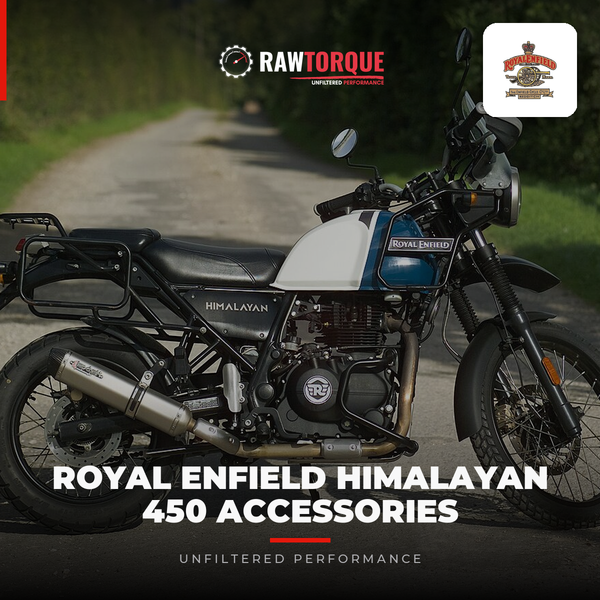
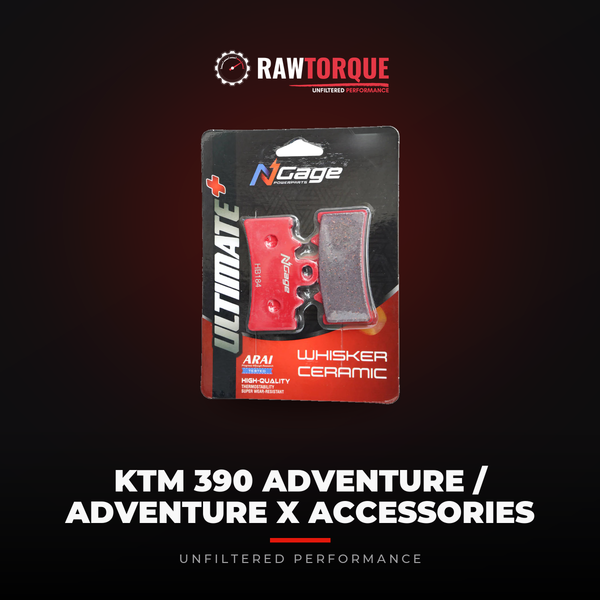
Featured in this guide
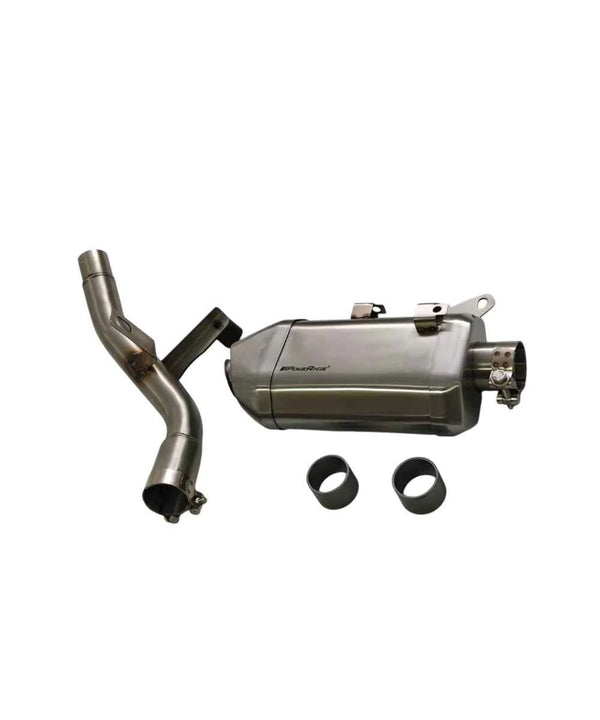
Powerage Slip-On Exhaust for Royal Enfield Himalayan 450, Single & Dual O₂ Sensor Variants
Rs. 13,989.00
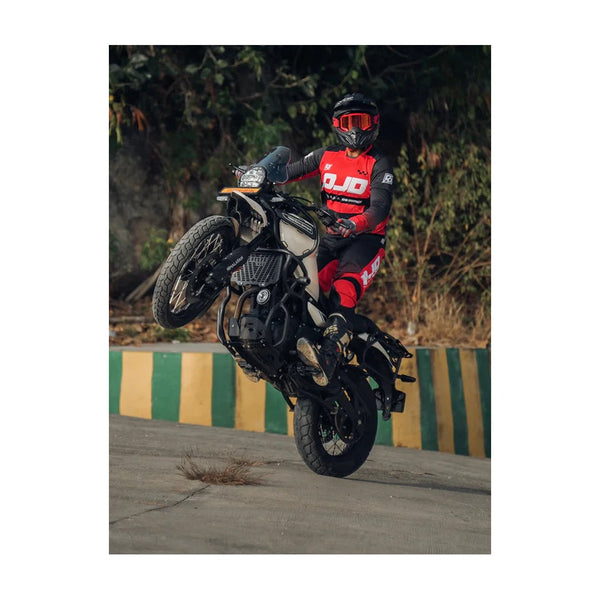
LCB Vambrace Bash Plate for Royal Enfield Himalayan 450, Heavy-Duty Mild Steel Underbody Protection | Legundary Custom Builds
Rs. 2,879.00
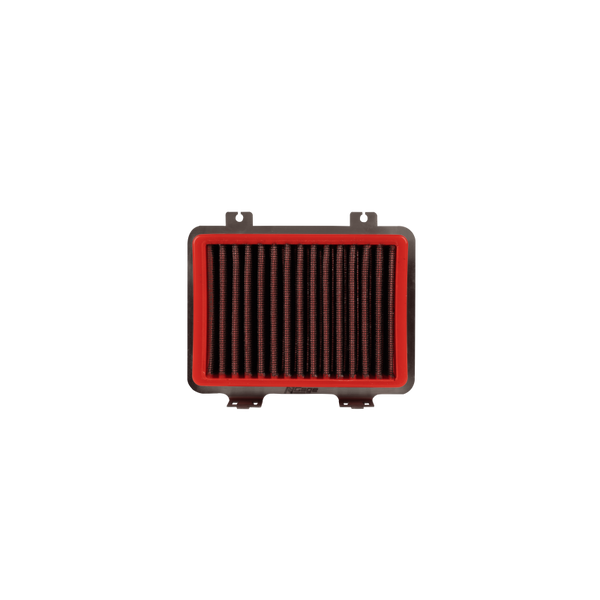
NGage Hyper Flow Air Filter for KTM Duke 125 & 390, Adventure 250 & 390, RC 200 & 390 (BS4 & BS6)- 011PKTM390
Rs. 4,250.00
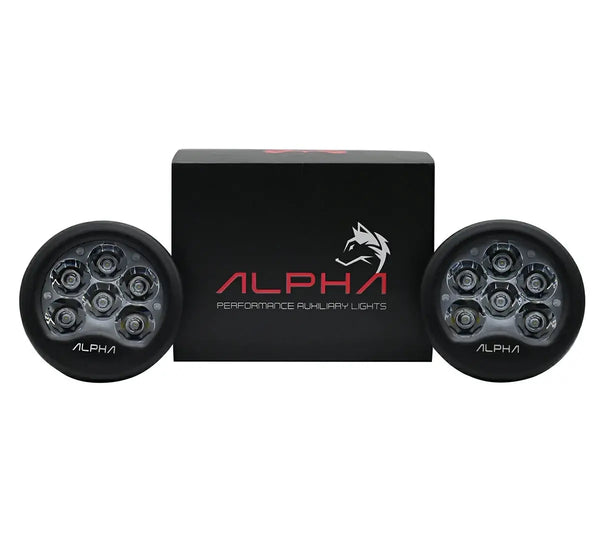
Maddog Alpha Performance Auxiliary Lights | 9600 Lumens | IP67 Waterproof | Universal Fit
Rs. 10,249.00


