Touring Setup
The Complete Motorcycle Touring Setup Guide for Indian Riders (2026)
Planning a long-distance ride in India? From Ladakh to the Konkan coast, your stock bike isn't built for it. This guide covers the 12 essential touring upgrades — crash guards to luggage systems — for every bike, every budget, every Indian road condition.

By Lijo Mathew Jacob | Updated June 2026 | 15 min read
Indian roads don't forgive an unprepared bike. From the broken tarmac of Spiti to the relentless heat of the Konkan coast, from monsoon-flooded NH66 to the sandy corrugations of Rajasthan state highways, touring here demands a different kind of preparation entirely.
Your stock setup was never built for it. Manufacturers calibrate suspension for urban solo riders, headlights for well-lit city streets, and luggage capacity for a helmet bag. The moment you load gear, point the nose toward a mountain pass, and commit to 600 km days, every compromise in the factory build becomes a problem.
Whether you're riding a Royal Enfield Himalayan 450, a KTM 390 Adventure, a Honda CB500X, or a Triumph Scrambler 400X, this guide covers the 12 upgrades that consistently separate a touring-ready motorcycle from one that breaks down at the worst possible moment.
This is written from actual kilometres on Indian roads. No filler. No paid placements.
What's Covered in This Guide
- Why your stock setup isn't enough for Indian touring
- The 12 essential touring upgrades, ranked by impact
- Where to spend first: priority by riding style
- Budget allocation guide: what to upgrade at each spend level
- Quick-reference setup guide by bike platform
- FAQ: 10 answers to the most-asked Indian touring questions
Why Stock Isn't Enough for Indian Touring
Every motorcycle manufacturer designs to a cost and a market. In India, that market is urban commuters and weekend riders. Touring-specific demands, sustained load, altitude variation, unpaved surfaces, 10-hour riding days, are treated as secondary considerations at best.
What that means in practice:
- Suspension is calibrated for a single rider on smooth tarmac. Load it with panniers and a pillion on a Manali-Leh road, and it bottoms out on stones that would otherwise be minor bumps.
- Headlights on most sub-500cc bikes produce 30-40W of effective road illumination. In fog at 4,500m altitude at 8 PM, that isn't enough to see what you need to see.
- Luggage capacity is zero from the factory. Every kilogram of gear added unbalanced shifts the bike's handling in ways the factory never tested.
- Engine and frame protection is nonexistent. A low-speed tip on a gravel shoulder in Spiti, with zero workshops within 80 km, can crack a fairing or puncture a radiator and strand you completely.
Indian touring also adds environmental extremes that European and Japanese factory testing doesn't cover: altitude from sea level to 5,359m (Khardung La), temperatures from 45°C in Rajasthan to sub-zero high-altitude nights, and monsoon exposure that soaks everything not waterproofed.
The upgrades below address each of these realities systematically, in priority order.
The 12 Upgrades Every Touring Rider Needs
1. Crash Guards and Engine Protectors
Why it matters: The single highest-priority upgrade on any touring bike. A low-speed tip on a gravel shoulder, a missed footing on a mountain pass, or a sudden sand patch at low speed can send your motorcycle over. Without crash guards, engine casings, fairings, radiators, and indicator mounts take direct hits. On an ADV bike 200 km from the nearest workshop, that ends your ride.
What distinguishes a quality crash guard: High-tensile mild steel (preferred for Indian off-road) or 6061-T6 aluminium (lighter, better for highway touring). Welded stress points, not bolted through the tube. Model-specific mounting that uses factory bolt holes. A good guard doesn't rattle, doesn't shift under load, and absorbs impact by deforming rather than transmitting force to the frame.
What to get: Upper and lower crash guard sets for comprehensive protection. If your bike is liquid-cooled, confirm the guard provides radiator coverage. A bash plate (underbody guard) is separate, covered under upgrade #10.
Cost range: Quality crash guards for popular ADV bikes run approximately Rs 4,000 to Rs 12,000 depending on material and coverage.
2. Panniers and Luggage System
Why it matters: How you carry gear on a motorcycle directly influences handling, tyre wear, and rider fatigue. Unbalanced weight kills confidence at speed. A strap-on bag that shifts is a crash risk. A proper luggage system keeps weight low, centred, and locked.
Hard vs. soft panniers: Hard cases offer security (lockable), weather sealing, and crash resistance. They maintain their shape under impact. Soft panniers are lighter, cheaper, and more flexible but require a proper mounting rack and offer less weather protection. For Indian touring, where you will encounter monsoon rain, dust, and rough roads on the same trip, hard cases earn their cost back.
Weight distribution: Heavier items go low and close to the bike's centre of gravity. Maximum 5 kg per pannier is a practical limit for most ADV bikes. Tail bags should carry only the lightest items: rain layer, sleeping bag, electronics. Never strap bags directly to the seat without a rack, the lateral movement under braking is significant.
Indian-specific consideration: Padlocked hard cases are a real theft deterrent at dhabas and roadside stops, particularly in areas where motorcycle theft is common.
3. Touring Windscreen and Wind Deflector
Why it matters: Wind fatigue is the most underestimated enemy of long-distance riding. At 100 km/h for 6 hours, constant wind blast against your helmet and chest creates shoulder tension, neck stiffness, and genuine cognitive load. Riders consistently underestimate how much mental energy goes into fighting wind resistance over a full day.
Getting the height right: The correct screen height places turbulence against your chest, not at helmet level. A screen too tall creates a standing wave at visor height, often worse than no screen at all. The ideal position shifts wind pressure from your face and helmet to your chest, where your body handles it far more efficiently.
Bikes that need it most: Royal Enfield Interceptor 650, Meteor 350, CB350, Hunter 350. All have near-zero wind protection from the factory despite being highway-capable machines.
Material: Scratch-resistant polycarbonate with UV coating. Acrylic yellows and crazes within two seasons of Indian sun. Model-specific fitment matters, universal screens vibrate at highway speed.
4. Upgraded Suspension (Preload and Rear Shock)
Why it matters: Factory suspension is calibrated for a single rider at moderate speed on smooth roads. Add 15 kg of packed gear, rough mountain roads, and occasional pillion weight, and the stock setup becomes unpredictable. Front dive under braking increases, the rear squats and wallows, and mid-corner bumps that should be absorbed become steering inputs.
The minimum viable fix: Rear shock preload adjustment. Most modern ADV bikes have it. If yours does, increase preload two or three steps when loaded. It takes five minutes with a C-spanner and transforms loaded handling. If your bike has no preload adjustment, an adjustable aftermarket rear shock (approximately Rs 8,000 to Rs 20,000) is the single most impactful handling upgrade for touring.
Fork springs: If you plan to tour with consistent heavy loads, stiffer fork springs prevent the nose-dive braking behaviour that builds fatigue. This is more of a long-term touring setup than a first upgrade, but worth planning for regular Himalayan runs.
5. Auxiliary LED Lights
Why it matters: Pre-dawn starts and late afternoon arrivals are unavoidable on Himalayan routes where you must clear passes before 3 PM to avoid afternoon weather. Stock headlights on most sub-500cc bikes produce approximately 1,000 to 1,500 lumens. A quality pair of auxiliary LEDs adds 3,000 to 6,000 lumens of wide-beam coverage. The difference in a foggy mountain descent at dusk is not subtle.
What matters in a light spec: Raw lumen count is less important than beam pattern and waterproofing. A wide, low flood beam covers the road edge where animals appear. IP67 waterproofing is the minimum for Indian conditions. Wiring through a relay with an inline fuse protects your battery and avoids the common failure mode where cheap direct-wired lights drain the battery when the bike sits unused at altitude.
6. GPS Mount with Charging
Why it matters: Navigation off NH corridors in India becomes genuinely difficult. State highways through forest areas, Himalayan passes, and coastal back roads all have limited network coverage. A phone mounted securely at handlebar height, with reliable charge, running offline maps is the practical touring navigation setup. A phone running maps in your jacket pocket, dying on the approach to Rohtang, is how people get lost.
What to look for: Handlebar mount with vibration damping to protect your phone's camera OIS module. Waterproof case or mount rated for rain. USB-A or USB-C at 2A minimum output. Quick-release mechanism for parking security.
7. Seat Upgrade or Gel Pad
Why it matters: Pain is cumulative and insidious. The stock saddle feels fine for 100 km. By 400 km, hotspots develop on the sit bones. By 700 km, your posture compensates in ways that cause lower back and hip flexor issues. Riding with pain creates decision fatigue and increases accident risk on long days.
Options ranked by cost: A sheepskin seat cover (approximately Rs 1,500) reduces hotspots meaningfully for moderate distances. A bolt-on gel pad adds cushioning without replacing the OEM seat. An aftermarket touring seat recontours the foam and changes the rider triangle, the most effective but most expensive option. For heated regions, avoid solid foam units, gel or open-cell foam breathes better.
8. Handlebar Risers and Ergonomic Grips
Why it matters: Factory handlebar positions are compromises between rider posture and handlebar aesthetics. For riders taller than roughly 5'8", most ADV bikes require slight wrist flexion at rest. After six hours, that posture creates wrist and shoulder fatigue that accumulates faster than comfort metrics from short test rides would suggest.
20-30mm handlebar risers shift you to a more upright position without requiring brake and clutch cable extensions on most platforms. Combined with bar-end weights (to reduce vibration buzz on single-cylinder bikes) and gel-core grips, the ergonomic improvement on a full touring day is significant.
9. Tyre Pressure Monitoring System (TPMS)
Why it matters: Tyres lose pressure across altitude changes, temperature differentials, and distance. A slow puncture from a road nail on a highway at 90 km/h is manageable if you feel the handling change early. If you don't, the tyre can reach dangerous pressures before the ride quality change becomes obvious. A TPMS pressure drop alert can give you the 2 to 3 km of controlled deceleration that prevents a high-speed blowout. Cost approximately Rs 2,000 to Rs 5,000 for a quality motorcycle-specific unit.
10. Bash Plate and Sump Guard
Why it matters: Any touring that involves gravel roads, mountain passes, forest tracks, or river crossings, and Indian touring inevitably does, exposes the oil sump to direct rock strike. One contact between a sharp stone and the oil pan results in immediate oil loss and engine seizure within minutes. A bash plate is the lowest-cost form of insurance for a liquid or oil-cooled engine.
What to specify: 3mm mild steel or 4mm aluminium for full coverage of the oil pan and front frame rails. Drainage holes prevent water pooling after river crossings. For bikes with low ground clearance like the KTM 390 Adventure, a bash plate is not optional for any meaningful off-road use.
11. Chain Maintenance Kit
Why it matters: A dry or stretched chain will fail. Chain failure at speed is a catastrophic mechanical event. On a tour through Spiti or the North-East, you will not find a workshop at the moment you need one. Carrying a chain maintenance kit takes 500 grams of pack space and eliminates one of the most common tour-ending mechanical failures.
What to carry: Chain lube (wet formula for monsoon riding, dry formula for dusty terrain in Ladakh and Rajasthan), clean cloth, chain tension check tool. For tours of 7+ days, carry a spare master link as emergency backup.
12. Tool Kit and Emergency Repair
Why it matters: Workshops thin out rapidly on NH1 above Sarchu, on coastal NH66 after midnight, and throughout most of the North-East. Carrying the right tools handles the most common failures: tubeless punctures (most frequent road problem), electrical fuse failures, and loose fasteners from sustained vibration.
Minimum touring kit: Tubeless tyre plug kit with 10 mushroom plugs, CO2 inflators or a 12V mini compressor, a spanner set in your bike's common bolt sizes, zip ties, electrical tape, spare fuses in your bike's rating, a compact tyre pressure gauge. Under 2 kg in a waterproof roll bag.
Where to Spend First: Priority by Riding Style
Highway Touring (NH Routes, Long-Distance Tarmac)
- Crash guards + windscreen
- Luggage system + seat upgrade
- GPS mount + auxiliary lights
- TPMS + handlebar risers
Adventure and Off-Road Touring (Himalayan Routes, Forest Roads)
- Crash guards + bash plate
- Suspension upgrade + luggage system
- Auxiliary lights + TPMS
- Windscreen + seat upgrade
Coastal and Monsoon Touring (NH66, Konkan, North-East)
- Waterproof luggage system + crash guards
- Tyre upgrade + TPMS
- Windscreen + waterproof auxiliary lights
- Seat upgrade + GPS mount
Budget Allocation Guide
Most riders build their touring setup in stages. Here's how to prioritise spend across three levels:
First Rs 10,000
Crash guards (Rs 4,000 to Rs 8,000) and a basic luggage solution: either a saddle stay plus soft bags or a simple rear rack. This covers the most critical safety and practicality upgrades. Everything after this is incremental improvement.
First Rs 25,000
Add a proper pannier system on a dedicated rack, an auxiliary LED pair with relay wiring, and a GPS mount with charging. This gives you protection, luggage, navigation, and lighting. The complete functional touring setup.
First Rs 50,000
Add a rear shock upgrade or fork spring improvement, a touring windscreen, TPMS, handlebar risers, gel grips, a touring seat, and a quality rain suit. This is a comprehensively prepared touring motorcycle that handles Indian conditions without meaningful compromise.
Quick-Reference: Setup by Bike Platform
Royal Enfield Himalayan 450 / 411: Crash guard, bash plate, rally windscreen, pannier rack, rear shock upgrade, 21/18 tyre combo for mixed terrain. The 450 has strong stock suspension but benefits from preload adjustment when loaded.
Royal Enfield Interceptor 650 / GT 650: Crash guard, touring windscreen, handlebar risers, luggage system, LED fog lights, gel seat. The 650 platform has strong ergonomics stock but zero wind protection and no luggage provisions.
Royal Enfield Meteor 350 / Hunter 350: Crash guard, windscreen, tank bag, luggage rack, LED auxiliary lights. Comfortable ergonomics, limited carrying capacity.
KTM 390 Adventure: Bash plate (critical, minimal ground clearance stock), rally windscreen, slim side panniers, fork spring upgrade for loaded riding. The 390 ADV rewards proper setup more than almost any other platform in this segment.
Bajaj Dominar 400: Crash guard, knuckle guards, touring screen, luggage system, handlebar risers, USB charging port. The Dominar has among the best stock ergonomics in the segment for tall riders.
Honda CB350 / H'ness / CB350RS: Crash guard, windscreen, luggage rack, pannier system, LED spots. The CB platform is naturally comfortable for medium-distance touring; extending to 600+ km days needs the windscreen and luggage sorted.
Triumph Speed 400 / Scrambler 400X: Crash guard, rally windscreen, luggage frame, bash plate for Scrambler, FuelX Pro+ fuel optimizer for both (reduces lean-run jerkiness on long trips).
FAQ: 10 Answers for Indian Touring Riders
What's the most important upgrade for a first touring bike?
Crash guards, without question. A quality set runs Rs 4,000 to Rs 12,000 depending on the bike. That is a fraction of what you'll spend on fairing replacement, engine case repair, or radiator damage from a single low-speed tip-over. On remote Indian terrain, a fall without crash guards can end your tour entirely. A fall with them usually means picking the bike up and continuing.
Can I tour on a Royal Enfield Classic 350?
Yes. The bike's comfort, low seat height, and relaxed ergonomics are genuinely well-suited to low-speed touring on broken roads. Its primary limitation is sustained highway speed, comfortable at 80 to 90 km/h, strained above 100. Fit a crash guard, a windscreen, and a proper luggage rack. Then ride it. Thousands of Indians have done Leh on a Classic.
Do I need hard panniers or are soft bags sufficient?
Soft bags work well for tarmac-focused tours under 7 days where you're staying at places with secure parking. For mountain or monsoon touring, hard cases win on every relevant metric: waterproofing, security, crash resistance, and shape retention under impact. If budget constrains you initially, start with quality soft panniers on a purpose-made rack. Never strap bags directly to the subframe or seat without a dedicated mounting system.
How do I balance luggage weight on a motorcycle?
Heavier items go low and close to the centreline. Equal weight on both sides (weigh your panniers before loading). Keep the tail bag for lightest items: rain gear, sleeping bag, a layer. Total loaded luggage weight should not exceed 20% of the bike's kerb weight as a rough guide. A heavily rear-loaded bike slows steering and reduces front-wheel traction, which matters most in the mountain switchbacks where handling precision is critical.
What tyres should I use for Ladakh or Himalayan touring?
Dual-sport tyres with a roughly 70/30 tarmac-to-off-road performance split work well for most Himalayan routes. Full knobbies wear fast on NH roads and produce uncomfortable handling at sustained highway speed. Proven options for Indian ADV touring include the Metzeler Tourance Next, Michelin Anakee Adventure, and Pirelli Scorpion Rally STR. Check availability in your wheel size before departure. Replacement tyre sourcing in Ladakh and the North-East is limited.
Is a touring windscreen necessary?
For daily distances above 400 to 500 km, yes. The neck and shoulder stiffness reduction alone is worth the cost on a 10-hour sustained highway day. The subjective difference is significant enough that most riders who fit one never again do serious long-distance riding without it. For shorter rides or casual weekend touring, it becomes a nice-to-have rather than a necessity.
How do I choose the right windscreen height?
Sit on your bike in normal riding position wearing your helmet. The ideal windscreen height deflects air from your visor and face, directing turbulence to your chest instead. A screen too tall pushes a turbulent wake directly at your helmet, causing buffeting that is often worse than no screen at all. If you're between heights, err shorter rather than taller.
What's the best way to carry tools on a touring bike?
A compact waterproof roll bag inside a pannier or under the seat. Prioritise tyre repair (tubeless plugs, CO2 inflators), chain maintenance, and electrical fault tools (spare fuses, electrical tape). A quality multi-tool covers most on-road adjustments. Keep total weight under 2 kg. A complete basic kit weighs about 1.2 to 1.5 kg in a roll bag.
Do I need a fuel controller upgrade for touring?
Not as a foundation upgrade, but a fuel controller makes a meaningful difference in rideability on long-distance runs. Modern BS6 engines run lean to meet emission norms, which creates throttle jerkiness at part-throttle touring speeds and increases heat output. A fuel optimizer like the FuelX Pro+ smooths that behaviour and improves fueling consistency across altitude changes. Particularly relevant on Triumph 400 series and Royal Enfield 650 platforms.
What should I carry for emergency breakdown support?
At minimum: tubeless plug kit with 10 plugs and CO2 cartridges, spare fuses in all ratings your bike uses, zip ties, electrical tape, a basic spanner set, and your bike manufacturer's roadside assistance number. Royal Enfield and KTM both offer RSA programs. Roadside assistance coverage from your insurer is worth checking before a Himalayan trip. Register before you leave, not from a mountaintop with no network.
Build Your Touring Setup with Rawtorque
Every category in this guide is stocked at Rawtorque, selected for fitment quality, Indian-condition durability, and real-world performance. Fitment guidance is part of what we do. If you're unsure what fits your specific bike, contact us before ordering.
Featured in this guide
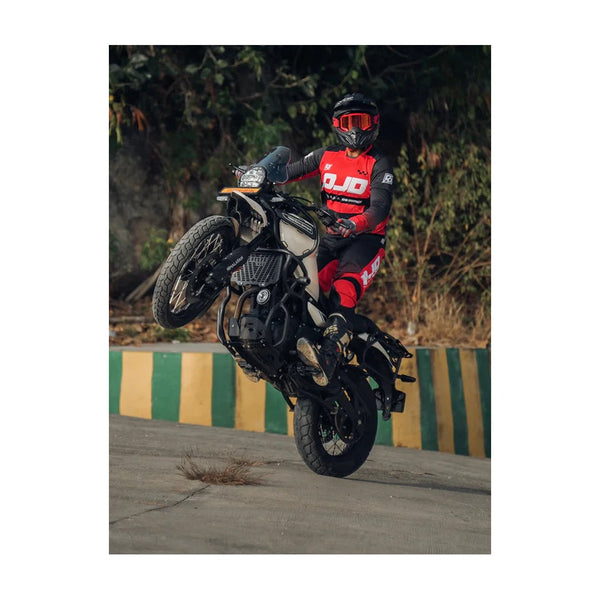
LCB Vambrace Bash Plate for Royal Enfield Himalayan 450, Heavy-Duty Mild Steel Underbody Protection | Legundary Custom Builds
Rs. 2,879.00
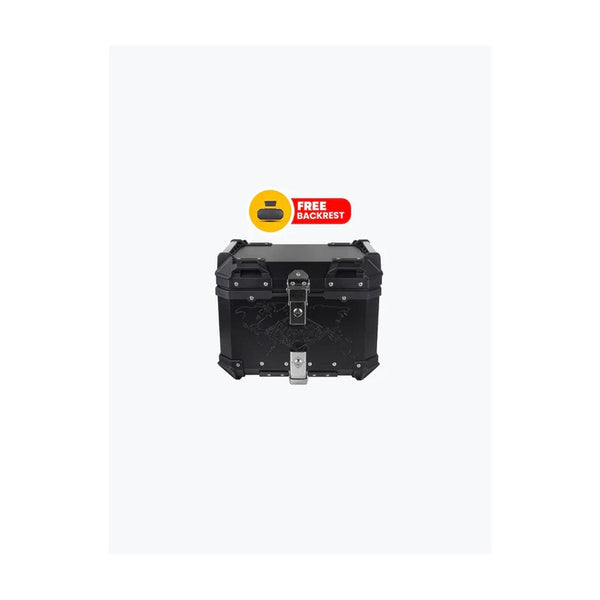
LCB Fort Knox Series TC 45L Aluminium Top Case with Backrest Pad, Black
Rs. 9,990.00
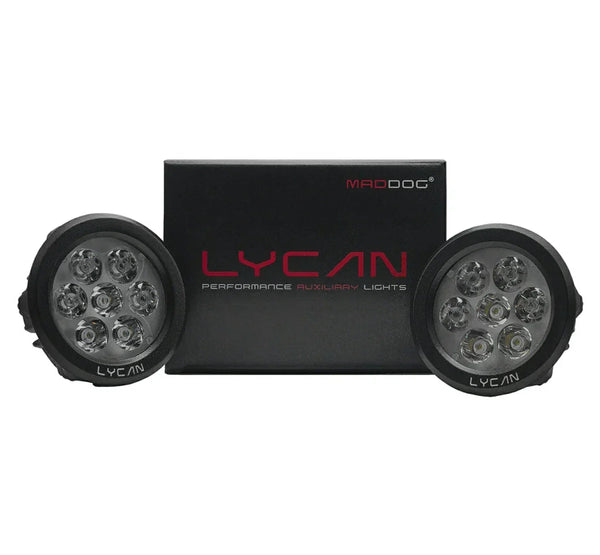
Maddog Lycan Performance Auxiliary Lights | 10800 Lumens Dual-Mode Spot & Flood Beam
Rs. 14,749.00
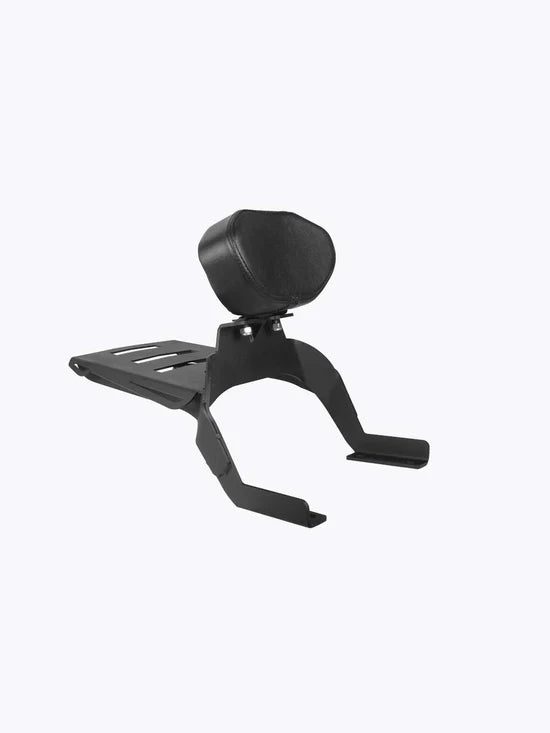
Legundary Interceptor 650 Backrest With Carrier, Mild Steel, Black
Rs. 3,885.00


