Performance Guides
Car Body Kits and Conversion Kit Upgrades in India (2026): ABS vs PP, Real Prices and What Fits Swift, Civic, Jazz and BMW
Car body kits and conversion kit upgrades in India cost Rs 24,999 to Rs 3.85 lakh. Compare ABS vs PP, generation and M/AMG/RS conversions, and real prices for Swift, Civic, Jazz, Polo and BMW.

A car body kit in India costs between ₹24,999 and ₹3.85 lakh, and the biggest reason for that spread is not the car. It is the material the kit is moulded in, and whether you are buying a styling kit or a full conversion kit upgrade. Those are two different products that people call by the same name, and confusing them is how buyers end up paying twice. On the same Honda Civic, the PP kit is ₹44,000 and the Taiwan ABS kit is ₹87,000. And at the other end, a conversion kit turns an F30 3 Series into a G80 M3 for ₹3,48,000.
Conversion kit upgrades are the fastest growing side of Indian car modification, and the least understood. You are not adding a lip to your bumper, you are moving your car a full generation forward, or across to the M, AMG or RS version of itself, for a fraction of what the real car costs. Done right it looks factory. Done cheaply it looks like a costume.
This guide breaks down what actually separates a ₹44,000 kit from an ₹87,000 kit for the same Honda Civic, which conversion upgrades are available and what they cost, what fits the popular Indian models, where Section 52 of the Motor Vehicles Act draws the line, and what a kit really costs once paint, fitting and freight are counted.
Styling kit or conversion kit upgrade? They are not the same thing
Almost every body kit sold in India falls into one of two groups, and the price gap between them is enormous.
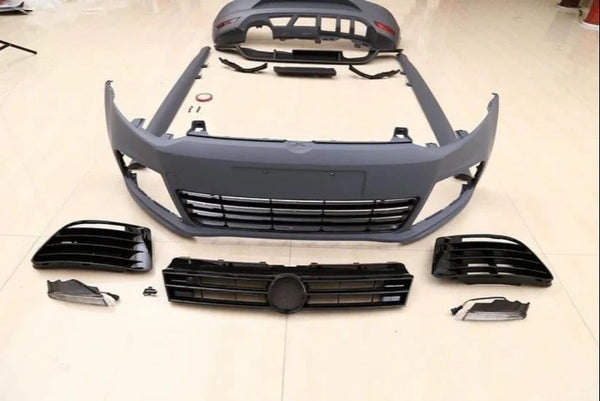
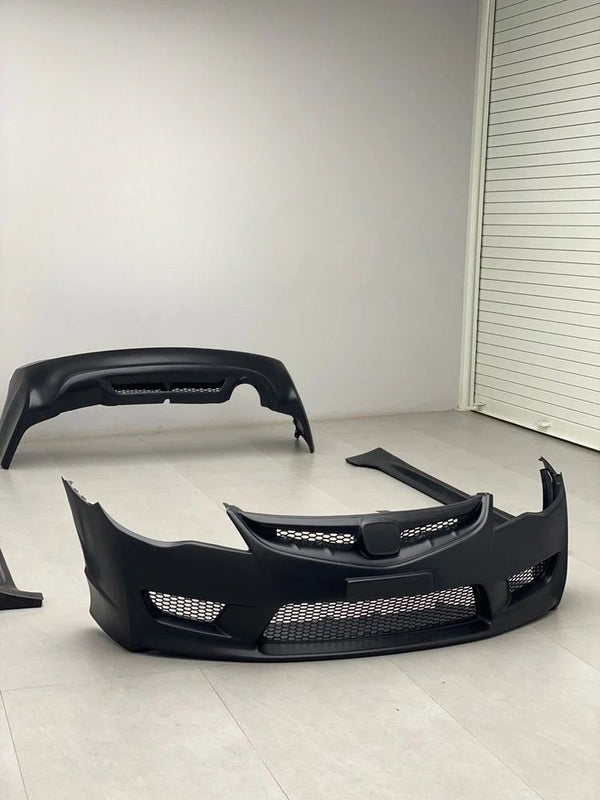
A styling kit adds to the bumpers you already have. Front lip or splitter, side skirts, rear diffuser or apron, sometimes a boot spoiler. The factory bumpers stay on the car. These sit between roughly ₹25,000 and ₹63,000, and they are the sensible entry point for most owners. The Toyota Innova Crysta Type 3 front kit at ₹24,999 and the VW Vento kit at ₹33,500 are typical of this group.

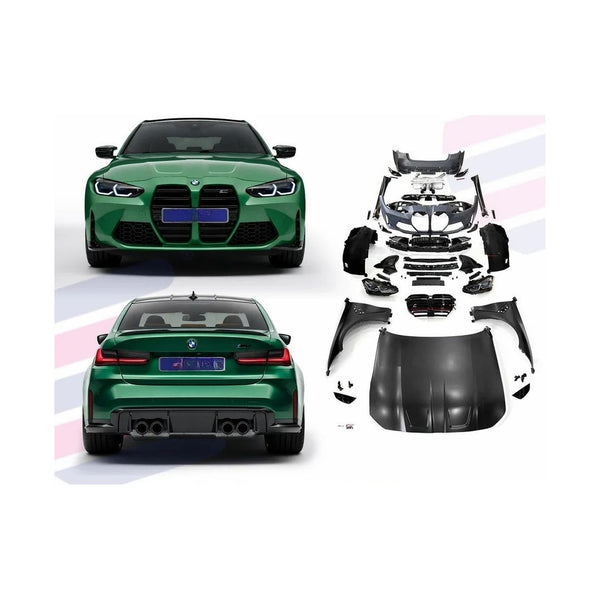
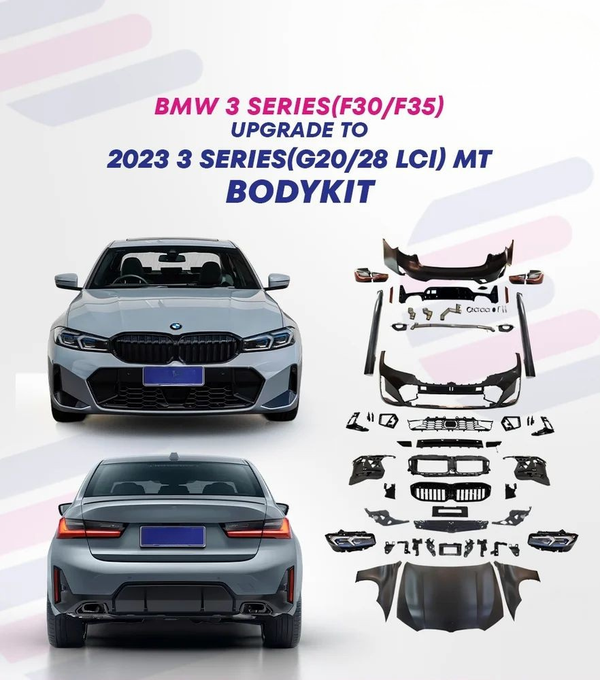
A conversion kit upgrade replaces the front and rear bumpers outright, and usually the grille, fenders and side skirts too, so the car takes on the face of a newer generation or a higher performance trim. This is where the BMW F30 to G80 M3 kit at ₹3,48,000 and the F10 to G60 M Sport kit at ₹3,85,000 live. You are not accessorising the car, you are re-facing it.
Conversion upgrades come in two flavours, and it is worth knowing which one you want:
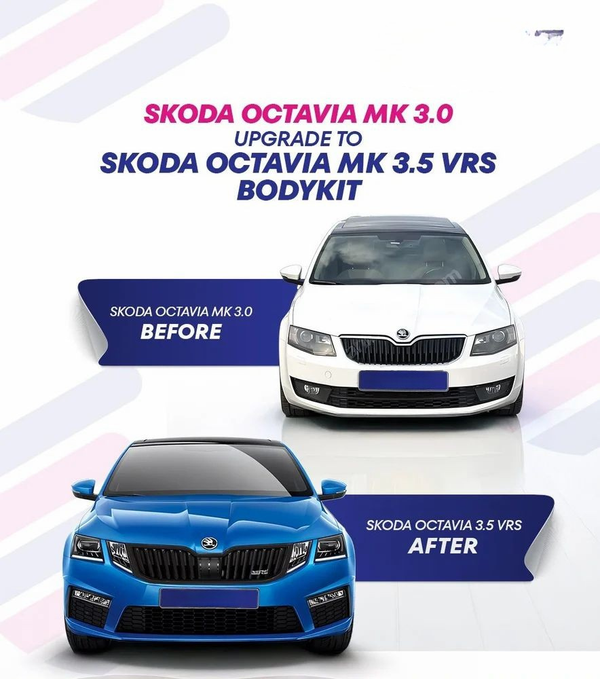
- Generation upgrades. Move the car forward in time. An F30 3 Series becomes a G20, an F10 5 Series becomes a G30 or a G60, an Octavia MK3 becomes an MK3.5. A 2014 car reads as a current one, which is the single biggest thing you can do for how the car is perceived.
- Performance trim upgrades. Move the car across the range. A 320d becomes an M3, a W204 C-Class becomes a C63 AMG, an A4 B8 becomes an RS4, an X3 becomes an X3M. Same year, far more presence.
The economics are why people do it. A used F30 with a ₹3,48,000 G80 M3 conversion sits at a fraction of what a real M3 costs in India, and a ₹2,35,000 F10 to G30 upgrade is a fraction of what a newer 5 Series costs. You are buying the look and the desirability, not the engine, and it is worth being honest with yourself about which of those you actually wanted.

The distinction matters for more than money. A lip kit that bolts to existing mounting points is a very different conversation with an insurer or an RTO officer than a full front-end conversion that changes how the car reads from thirty metres away. More on that below.
The material is the price: ABS, PP and fibreglass
Here is the part almost nobody explains properly. Take the Honda Civic. Two kits, the same Mugen silhouette, and the price nearly doubles:
| Kit | Material | Price |
|---|---|---|
| Honda Civic Mugen Body Kit | PP (polypropylene) | ₹44,000 |
| Honda Civic Mugen RR Body Kit | Taiwan ABS | ₹87,000 |
The same split shows up on the Civic Type R: ₹38,000 in PP for the 2006 to 2013 shape, ₹87,000 for the Taiwan ABS JD2 kit. Same look on a photo. Very different ownership.
ABS
Acrylonitrile butadiene styrene is the material factory bumpers are made from. It flexes under load instead of cracking, holds its shape through a Chennai summer, and takes paint cleanly because the surface is dimensionally stable. Panel gaps that were right on day one are still right two years later. On Indian roads, with speed breakers, kerbs and parking that is best described as optimistic, this is the property you are actually paying for. "Taiwan ABS" in a listing refers to the moulding origin, and it generally indicates tighter tooling than the cheapest local mouldings.
PP
Polypropylene is softer and more flexible. It shrugs off a light kerb scrape that might mark ABS, but it also relaxes over time, particularly in heat. Mounting tabs stretch, panel gaps open, and the kit needs periodic refitting. Paint adhesion is fussier and needs a proper adhesion promoter, so a cheap paint job on PP is where you see flaking first. It is a legitimate choice on a budget build or a car you plan to sell inside two years.
Fibreglass
Fibreglass allows shapes that injection moulding cannot, which is why one-off and show kits use it. It is also brittle. A knock that would flex ABS will crack fibreglass, and repair means resin, matting and sanding by someone who knows what they are doing. Surface prep is unforgiving, so a poor finish telegraphs through the paint. Buy it for a shape you cannot get otherwise, not to save money.
For a car that is driven daily in Indian conditions, ABS is the one that stays looking bought rather than looking fitted. If the budget only reaches PP, spend what you saved on the paint job instead of on more parts.

What fits what, and what it costs
These are the kits currently listed on Rawtorque, with live prices. Availability changes, so check the listing before you plan a build.
Maruti Suzuki
| Kit | Fitment | Price |
|---|---|---|
| Swift Type 2 Sports Body Kit (Taiwan ABS) | Swift 2012 to 2017 | ₹63,000 |
Honda
| Kit | Fitment | Price |
|---|---|---|
| Civic Mugen Body Kit (PP) | Civic | ₹44,000 |
| Civic Mugen RR Body Kit (Taiwan ABS) | Civic | ₹87,000 |
| Civic Type R Body Kit (PP) | Civic 2006 to 2013 | ₹38,000 |
| Civic Type R Body Kit (Taiwan ABS, JD2) | Civic | ₹87,000 |
| Civic Type R Body Kit (2020) | Civic 2020 | ₹89,000 |
| Jazz Type 1 Mugen Body Kit (PP) | Jazz Type 1 | ₹38,000 |
| Jazz RS Body Kit | Jazz 2015 to 2020 | ₹42,500 |
Volkswagen and Skoda
| Kit | Fitment | Price |
|---|---|---|
| Vento Body Kit (ABS) | Vento | ₹33,500 |
| Polo R-Line Body Kit (ABS) | Polo | ₹42,500 |
| Polo WRC Full Body Kit (ABS) | Polo | ₹45,500 |
| Jetta GLI Body Kit | Jetta 2012 onward | ₹49,000 |
| Jetta GLI Body Kit | Jetta 2015 onward | ₹63,000 |
| Octavia vRS Front Bumper Kit | Octavia MK3 5E, 2014 to 2016 | ₹48,000 |
| Octavia MK3 to MK3.5 vRS Conversion | Octavia MK3 | ₹2,09,000 |
Toyota and Hyundai
| Kit | Fitment | Price |
|---|---|---|
| Innova Crysta Type 3 Front Kit | Innova Crysta Type 3 | ₹24,999 |
| Elantra Front Conversion (Grille + DRL) | Elantra 2011 to 2015, to 2018 face | ₹29,999 |
| Fortuner Type 3 Sigma Body Kit | Fortuner Type 3 | ₹79,000 |
Conversion kit upgrades: BMW, Mercedes-Benz, Audi and Mini
This is conversion territory. You are replacing the car's entire face and tail, and the pricing reflects it. The column on the right is the whole cost of looking like a car that costs several times more.
| Kit | Fitment | Price |
|---|---|---|
| F30 M Sport Body Kit | 3 Series F30 | ₹89,000 |
| E90 LCI to E90 M3 | 3 Series E90 LCI | ₹89,000 |
| F10 to F10 M5 | 5 Series F10, 2012 to 2017 | ₹95,000 |
| F30 to M2 CS | 3 Series F30, 2011 to 2018 | ₹1,40,000 |
| F30 M3-Look Conversion | 3 Series F30 | ₹1,45,000 |
| F34 GT to M3 | 3 Series F34 GT | ₹1,85,000 |
| F30/F35 to G20/G28 LCI | 3 Series F30, F35 | ₹1,98,000 |
| F10 to G30 Conversion | 5 Series F10 | ₹2,35,000 |
| X3 F25 to X3M F97 LCI | X3 F25 | ₹3,20,000 |
| F30 to G80 M3 LCI | 3 Series F30 | ₹3,48,000 |
| F10 to G60/G68 M Sport | 5 Series F10, 2012 to 2017 | ₹3,85,000 |
| W211 to E63 AMG | E-Class W211, 2006 to 2009 | ₹83,000 |
| W204 to C63 AMG | C-Class W204, 2011 to 2014 | ₹1,48,000 |
| W212 LCI to W213 E63 AMG | E-Class W212 LCI | ₹2,50,000 |
| A4 B8 to RS4 | A4 B8 | ₹89,000 |
| A4 B8.5 to RS4 | A4 B8.5 | ₹89,000 |
| Countryman R60 JCW Front Kit | Countryman R60, 2010 to 2016 | ₹89,000 |
Fitment on body kits is generation and facelift sensitive in a way that mechanical parts are not. An F30 pre-LCI and an F30 LCI do not share a front bumper. A Swift Type 2 kit will not sit on a Type 3. If you are unsure which generation you own, send us the model year and a photo of the front three-quarter and we will give you fitment guidance before you order.
Are body kits legal in India?
The governing provision is Section 52 of the Motor Vehicles Act, 1988. It says an owner shall not alter a vehicle so that the particulars recorded in the certificate of registration are at variance with what the manufacturer originally specified.
The Supreme Court read that strictly in Regional Transport Officer v. K. Jayachandra (2019). The judgment drew a line between fitting accessories, which does not need the RTO involved for every minor item, and altering the basic structure of the vehicle, which does. Structural alteration that puts the car at variance with its registration is not permitted without approval under the Central Motor Vehicles Rules.
Applied to body kits, that produces a practical rule of thumb:
- Generally safe. Bolt-on lips, skirts, diffusers and spoilers that use existing mounting points, do not change the recorded dimensions, and leave the shell untouched.
- Grey, and it depends on execution. Full bumper replacements and conversion upgrades that keep the car within its original length and width. Legally these are still cosmetic, but they are conspicuous, so enforcement attention is more likely.
- Not permitted without approval. Anything that needs cutting, welding or bonding to the shell, widebody arches that increase the recorded width, or changes to the vehicle's registered dimensions.
Penalties for non-compliant alteration typically run ₹1,000 to ₹5,000, and in serious cases the vehicle can be impounded or the registration cancelled. Enforcement intensity varies a great deal by state and city. Kerala and Karnataka are noticeably more active on modified cars than most.
Two practical habits keep you out of trouble. Keep the invoice and fitment record for the kit, and photograph the car before and after. If a kit ever needs to come off for a fitness check, a bolt-on kit comes off in a day. A bonded one does not.
Insurance and your RC
This is the part that costs people real money, and it has nothing to do with a traffic stop.
Your policy is priced against the vehicle as registered. An undeclared modification gives an insurer room to argue at claim time, either that the risk profile changed or that the modification contributed to the loss. The claim does not have to be about the bumper for the bumper to become an issue.
The fix is unglamorous and it works. Tell your insurer, ask for the kit to be endorsed on the policy, and accept the small premium adjustment. A body kit is a declared accessory or it is an argument waiting to happen. On a ₹3.48 lakh conversion, that argument is not one you want to have.
What a body kit actually costs to land
The kit price is roughly two thirds of the real number. Budget for three more line items.
Paint. Kits at these prices generally arrive in primer or raw finish, not in your car's colour. Colour matching a metallic or a pearl across new panels and old ones is skilled work, and it is where a build either looks factory or looks aftermarket. Do not save money here. If the budget is tight, buy the PP kit and the good paint rather than the ABS kit and a rushed respray.

Fitting. A styling kit with model-specific brackets is within reach of a competent workshop. A full conversion, where grille, fenders, lights and sensors all have to line up, is not a job for a general garage. Ask to see a car they have done before you leave yours.
Freight. Body kits are large, light and awkward, which is the worst combination for courier pricing, because carriers bill on volumetric weight rather than actual weight. We price them on a flat per-zone basis so there are no surprises at checkout: ₹999 within Kerala, rising to ₹3,999 for the farthest zones. That is quoted upfront on the product page rather than discovered at the end.
Choosing, in order
- Confirm your generation and facelift, not just the model. This is the single most common ordering mistake on body kits.
- Decide styling kit or conversion upgrade. If you mainly want the car to look sharper, a lip kit at ₹25,000 to ₹45,000 gets most of the way there. If you want the car to read as a newer generation or as the M, AMG or RS version, that is a conversion, and it is a different budget and a different commitment. Be clear which one you are buying before you shop.
- Pick the material against how long you are keeping the car. Under two years, PP is defensible. Longer, or a daily driver, buy ABS.
- Price the paint before you buy the kit. Get the quote first. It changes which kit you should order.
- Declare it to your insurer. Ten minutes, once.
If you are building the car properly rather than only restyling it, the same logic applies underneath. Our guides on brake pad brands in India and Stage 1, 2 and 3 tuning cover the mechanical side. The full range sits in Shop by Car and Car Performance Upgrades.
Why buy a body kit or conversion upgrade from Rawtorque
- Model-specific styling kits and full conversion upgrades in ABS and PP, sold by a registered Indian business with the material stated on every listing rather than left vague.
- Generation and performance-trim conversions for BMW, Mercedes-Benz, Audi, Skoda and Mini, keyed to the exact chassis code so you are not guessing between an F30 and an F30 LCI.
- Flat per-zone freight on body kits, quoted upfront: ₹999 within Kerala, up to ₹3,999 for the farthest zones. No volumetric surprise at checkout.
- Partial COD on serviceable pincodes: a small advance online to confirm, balance on delivery.
- Fitment guidance from our team before you order, so the generation and facelift are right the first time.
Frequently asked questions
What is a car conversion kit?
A conversion kit replaces the front and rear bumpers, and usually the grille, fenders and side skirts, so a car takes on the face of a newer generation or a higher performance trim. A generation upgrade moves the car forward in time, such as BMW F30 to G20 or F10 to G30. A performance trim upgrade moves it across the range, such as F30 to G80 M3, W204 to C63 AMG, or A4 B8 to RS4. A styling kit, by contrast, only adds lips and skirts to the bumpers you already have.
How much does a conversion kit upgrade cost in India?
Conversion kit upgrades run from ₹83,000 for a Mercedes W211 to E63 AMG kit up to ₹3,85,000 for a BMW F10 to G60/G68 M Sport conversion. Popular mid-points include F10 to G30 at ₹2,35,000, Octavia MK3 to MK3.5 vRS at ₹2,09,000, and F30 to G80 M3 at ₹3,48,000. Paint, fitting and freight are additional.
Are conversion kits legal in India?
A conversion kit that replaces bumpers and panels using existing mounting points, without changing the vehicle's registered dimensions or cutting the shell, remains a cosmetic modification under Section 52 of the Motor Vehicles Act. It is more conspicuous than a lip kit, so it attracts more attention, and you should declare it to your insurer and keep the fitment documentation. Anything that widens the car or requires cutting or welding needs RTO approval.
Are car body kits legal in India?
Bolt-on cosmetic kits that use existing mounting points and do not change the vehicle's registered dimensions are generally permitted. Section 52 of the Motor Vehicles Act, 1988, read with the Supreme Court's 2019 ruling in RTO v. K. Jayachandra, prohibits alterations that put the vehicle at variance with its certificate of registration. Widebody kits, anything requiring cutting or welding to the shell, and changes to recorded dimensions need RTO approval.
What is the difference between ABS and PP body kits?
ABS is the material factory bumpers use. It is rigid, holds panel gaps over time, tolerates heat, and takes paint well. PP is softer and cheaper, more forgiving of light knocks, but it relaxes in heat and needs periodic refitting, and paint adhesion requires more preparation. On the same Honda Civic, the PP Mugen kit is ₹44,000 and the Taiwan ABS Mugen RR kit is ₹87,000.
How much does a car body kit cost in India?
Styling kits that add lips, skirts and diffusers to existing bumpers run roughly ₹24,999 to ₹63,000. Full conversion kits that re-face the car, such as BMW F30 to G80 M3, run ₹83,000 to ₹3,85,000. Add paint, fitting and freight on top of the kit price.
Do body kits come painted?
Generally no. Kits at these prices typically ship in primer or raw finish so they can be matched to your car's exact colour code. Check the individual listing, and get a paint quote before you order, because it materially changes the total.
Will a body kit void my car's warranty?
A bolt-on kit that does not modify structure should not void a manufacturer warranty in itself, though a manufacturer may dispute a specific claim if it can connect a failure to the kit. Keep your installation documentation. Declare the kit to your insurer separately, because warranty and insurance are two different exposures.
Can I remove a body kit before selling the car?
Yes, and this is the main practical argument for bolt-on over bonded kits. Removal returns the car close to original, though faint paint fade lines around mounting areas can remain. Photograph the car before installation so you can show a buyer what the original state was.
Will a body kit fit any year of my model?
No. Body kits are generation and facelift specific. A pre-facelift and facelift version of the same car usually do not share bumpers, and a Swift Type 2 kit will not fit a Type 3. Confirm your exact model year and variant, and ask us for fitment guidance if you are unsure.
Written by Lijo Mathew Jacob, founder of Rawtorque. Rawtorque supplies model-specific car body kits, conversion kit upgrades, styling and performance parts to owners across India. Last updated 14 August 2026.
Explore the range
Featured in this guide